{{ variable.name }} : {{ variable.values[selectedVariantsIndex[variable_index]].name }}
Quantity:
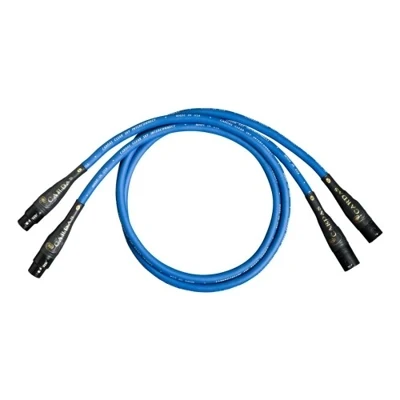
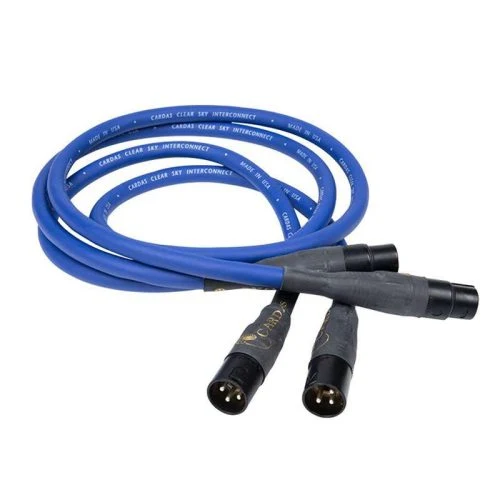
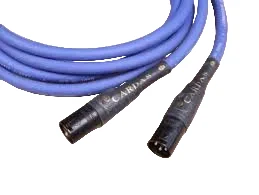
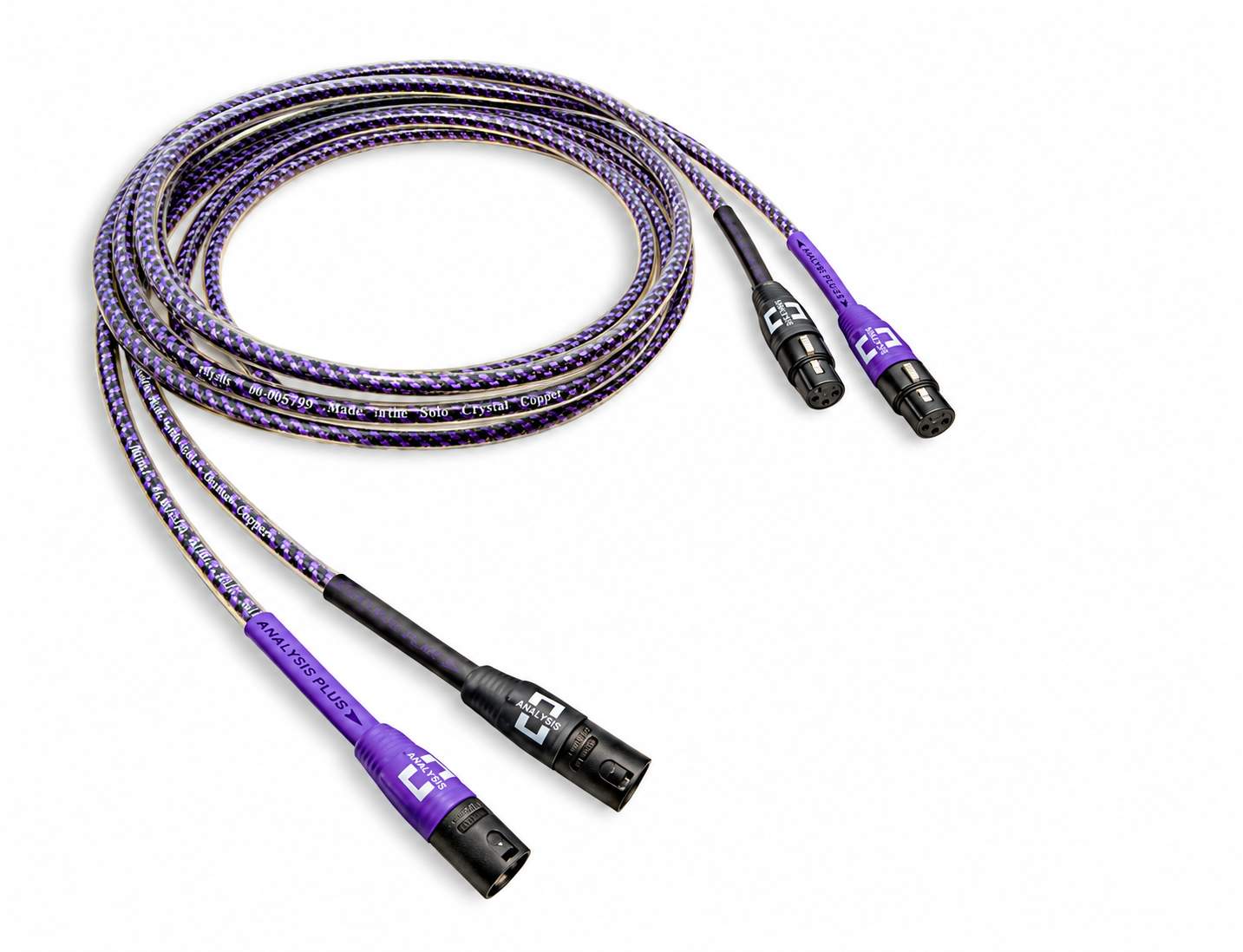
Cardas Audio's Clear Sky is the entry to the Cardas Clear line, and the first Cardas interconnect to use Matched Propagation conductors. Cardas describes it as transparent, dynamic and neutral. The copper is Grade 1, 99.9999% pure, built as Litz wire around a Kevlar core.
Other length & termination options are available. Call us to discuss your needs.
Matched Propagation is George Cardas's answer to a timing problem. A signal moves through copper faster than a charge moves through the insulation around it. Cardas says the lag smears low-level detail. Rather than add a network, Cardas sets the twist rate of each strand layer so the conductor's speed matches the dielectric's.
Two conductors at 23.5 AWG form a shielded twisted pair. Each sits in a non-conductive poly-e air tube, and the pair is bound in an ultra-thin FEP tape. A second layer of compressed air tubes then holds the tin-plated copper braided shield away from the conductors.
An extruded alcryn rubber jacket finishes the cable at 9.27 mm across. Cardas builds the Clear Sky for long or short runs alike, and says it suits any high-end system. Each cable is hand terminated in Bandon, Oregon.
Clear Sky ends in the Cardas CE XLR, the company's own XLR plug and its standard balanced termination here. The body is machined high-copper, non-magnetic brass and the contacts are silver plated. Cardas solders it to the cable by hand in Bandon, Oregon.
Run the Clear Sky from a balanced XLR output on your DAC, streamer, CD player or phono stage to a balanced XLR input on your preamp or amplifier. Keep left to left and right to right. Line up the pins and push until the latch clicks. Press the latch tab to release the plug.
Then leave it alone. Cardas says its cables settle with use, so plug in and listen.
Measure the route the cable will really take between your components, around shelves and behind the rack. Then add a little slack. As audio legend George Cardas puts it, "A cable that's just long enough usually turns out to be just not long enough." Keep the left and right cables the same length. We recommend a matched pair.
Balanced XLR works when both components have XLR jacks, and we recommend using XLRs whenever they do. If one component has only RCA jacks, use an RCA cable instead of an adapter. You only get the possible benefits of a balanced output with a pure XLR-to-XLR connection.
If your amplifier and speakers sit far from your source, we recommend a long interconnect over a long speaker cable. A really long interconnect affects system performance less than a really long speaker cable.
An interconnect often stays in a system for years, so it is easy to overlook. Look again when something else changes: a new DAC, streamer or phono stage, a better amplifier, or a move to components with balanced XLR jacks.
An interconnect is one link in the chain. It usually joins these categories.
Cardas's conductor design. It sets the twist rate of each strand layer so the signal in the copper travels at the same speed as the charge in the insulation. Cardas says that keeps low-level detail from smearing.
Cardas's own XLR plug, its standard balanced termination on the Crosslink through Clear Cygnus. High-copper, non-magnetic brass body, silver-plated contacts, hand soldered in Bandon, Oregon.
Cardas says at most 200 hours, and usually half that. Its advice is simple: "Plug them in, leave them plugged in, and enjoy your life."
A lifetime warranty. Every Litz strand is sealed in enamel, so the copper does not oxidize. Cardas says that is why its cables last.
Cardas Clear Cygnus XLR is the next rung. It moves to four conductors in a star-quad, adds a second layer of PTFE air tubes, and keeps the CE XLR plug.
Audio Advisor's tour of the Cardas factory in Bandon, where the Clear Sky is built and terminated.
Audio Advisor walks through Cardas cable construction, from Litz strands to hand-soldered plugs.
The most popular configurations are shown on this page. If your system requires a different length or termination, call our audio experts. We’ll help you choose the right configuration and arrange a custom cable for your system.
Want to learn more about interconnects, cable geometry, or RCA versus XLR? Visit our Learning Center for guides, tips, and expert advice.

Choose which cookies you'd like to allow. Necessary cookies keep the site working and can't be switched off.