
{{ variable.name }} : {{ variable.values[selectedVariantsIndex[variable_index]].name }}
Quantity:
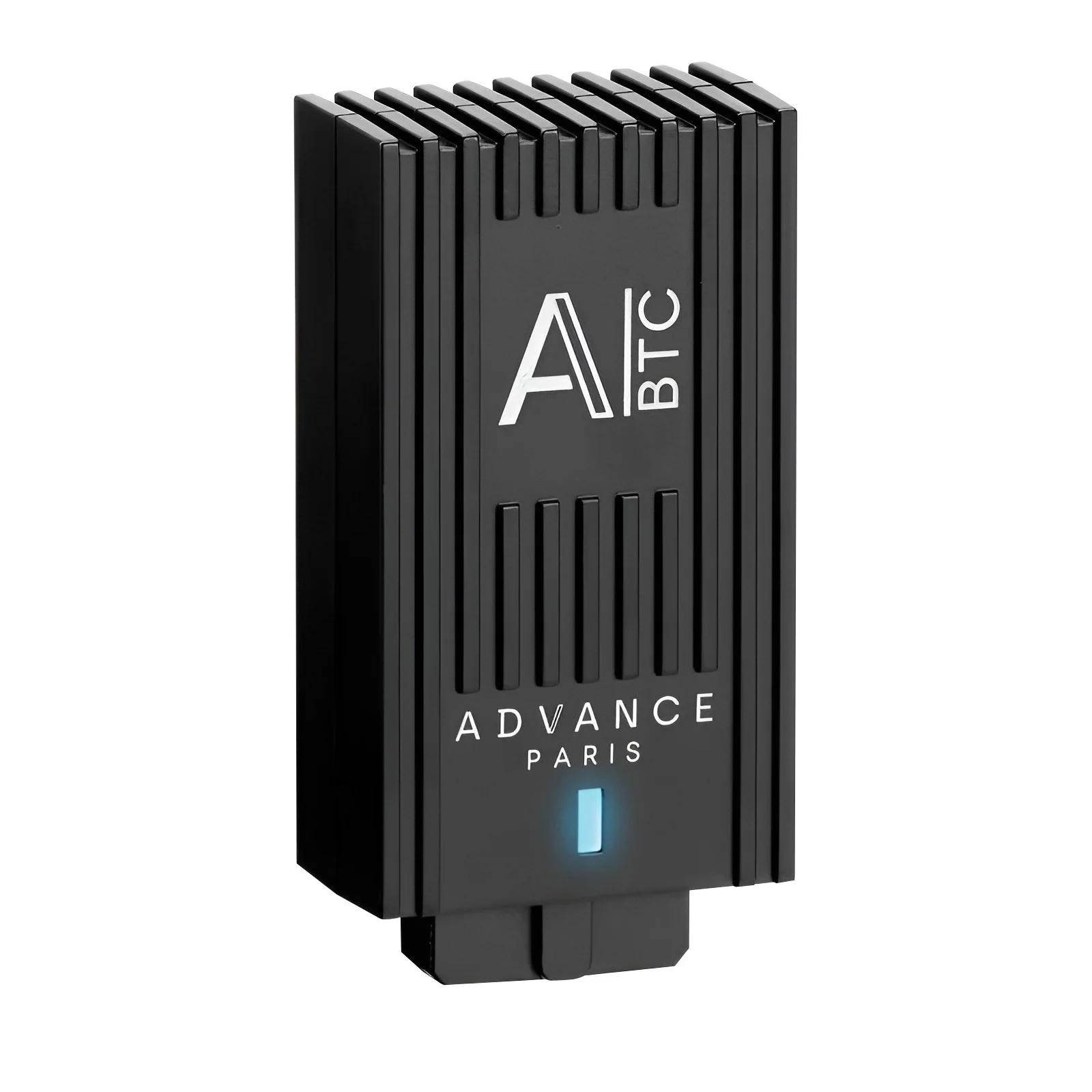
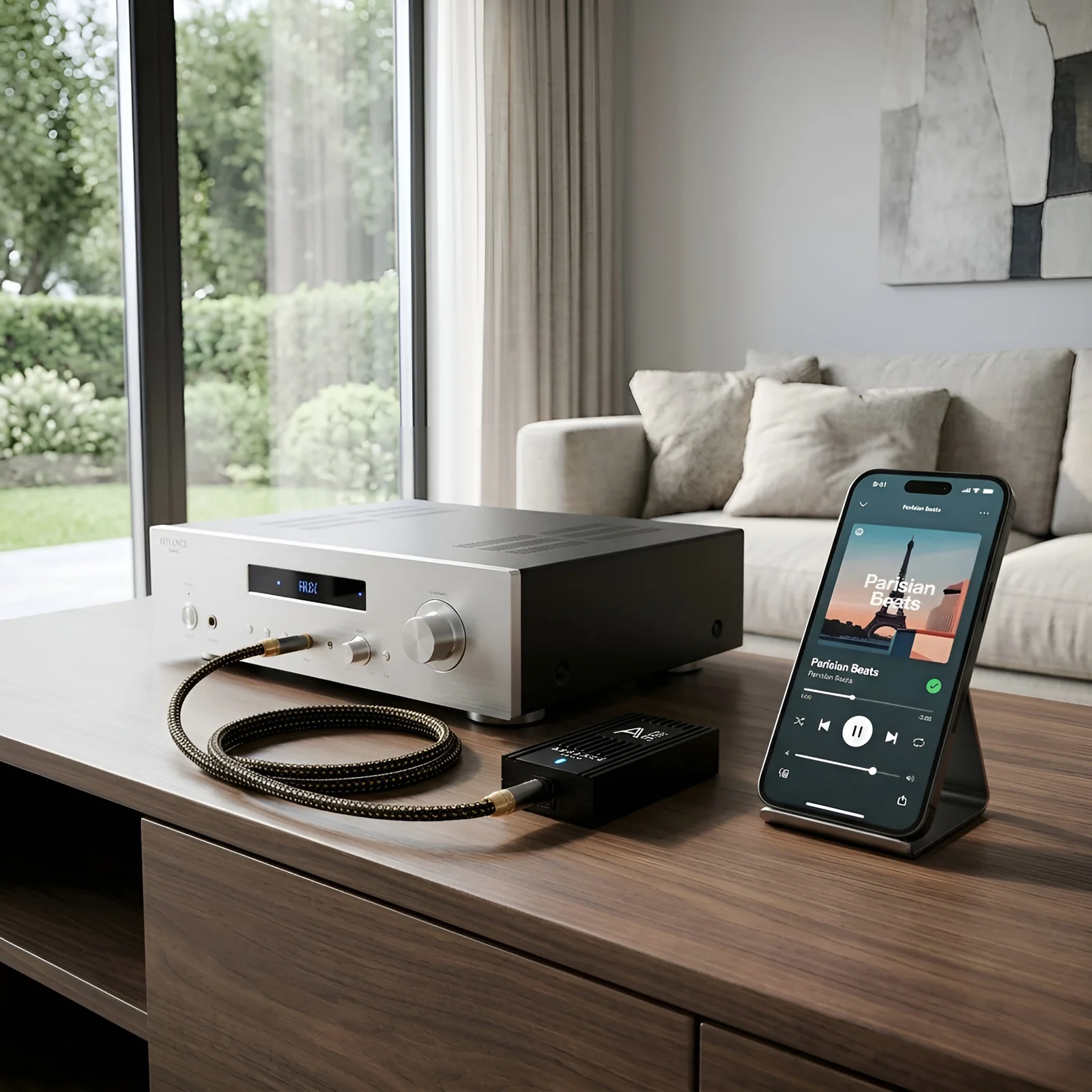
Most Bluetooth on a hi-fi amplifier only works in one direction: your phone sends, the amplifier receives. The Advance Paris A-BTC does both. It takes a stream from a phone, tablet or computer, and it will also send whatever your amplifier is playing out to a pair of wireless headphones.
That second half is the one people underestimate. It means a record, a CD or a TV feed running through your Advance Paris amplifier can move to headphones late at night without rewiring anything or getting out of your chair.
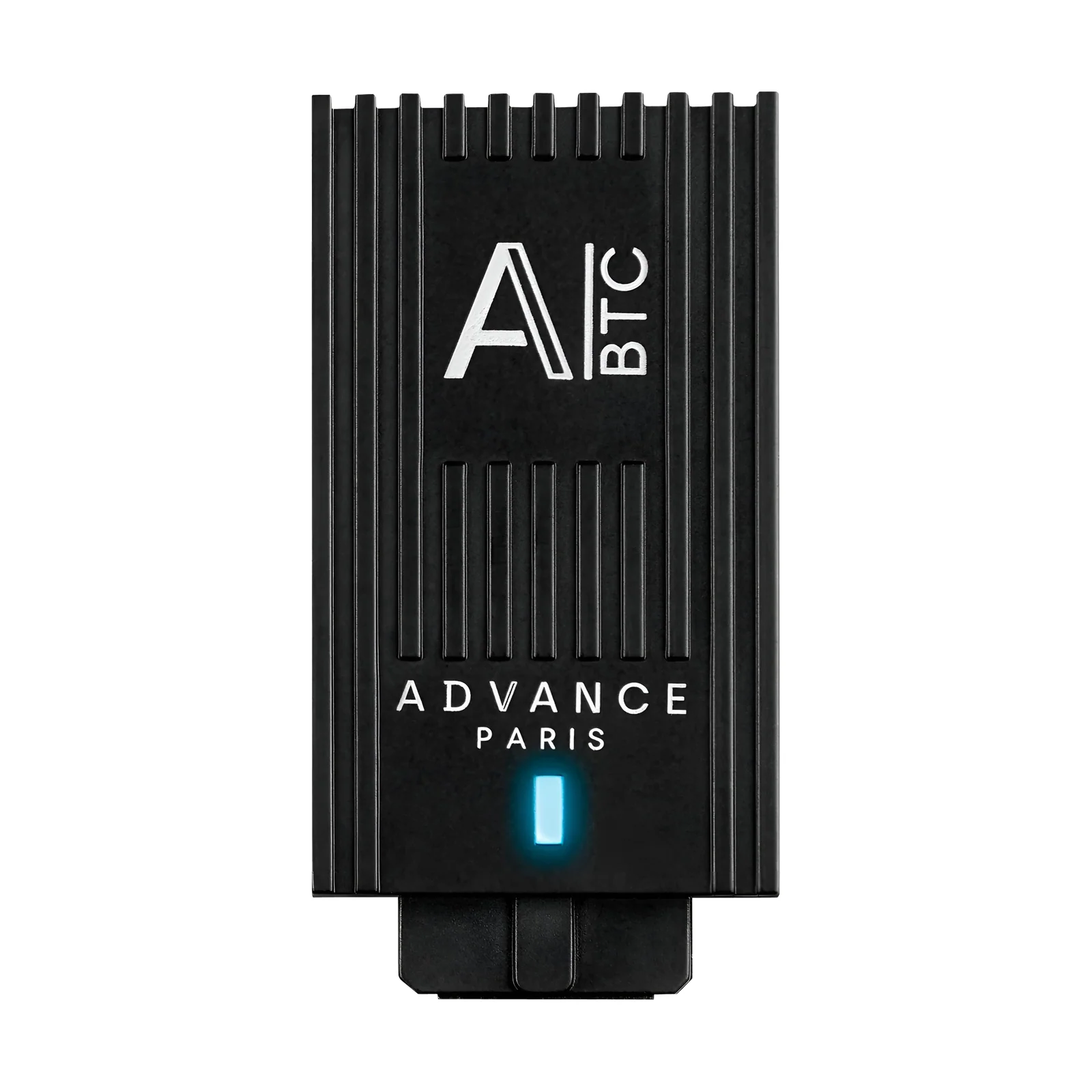
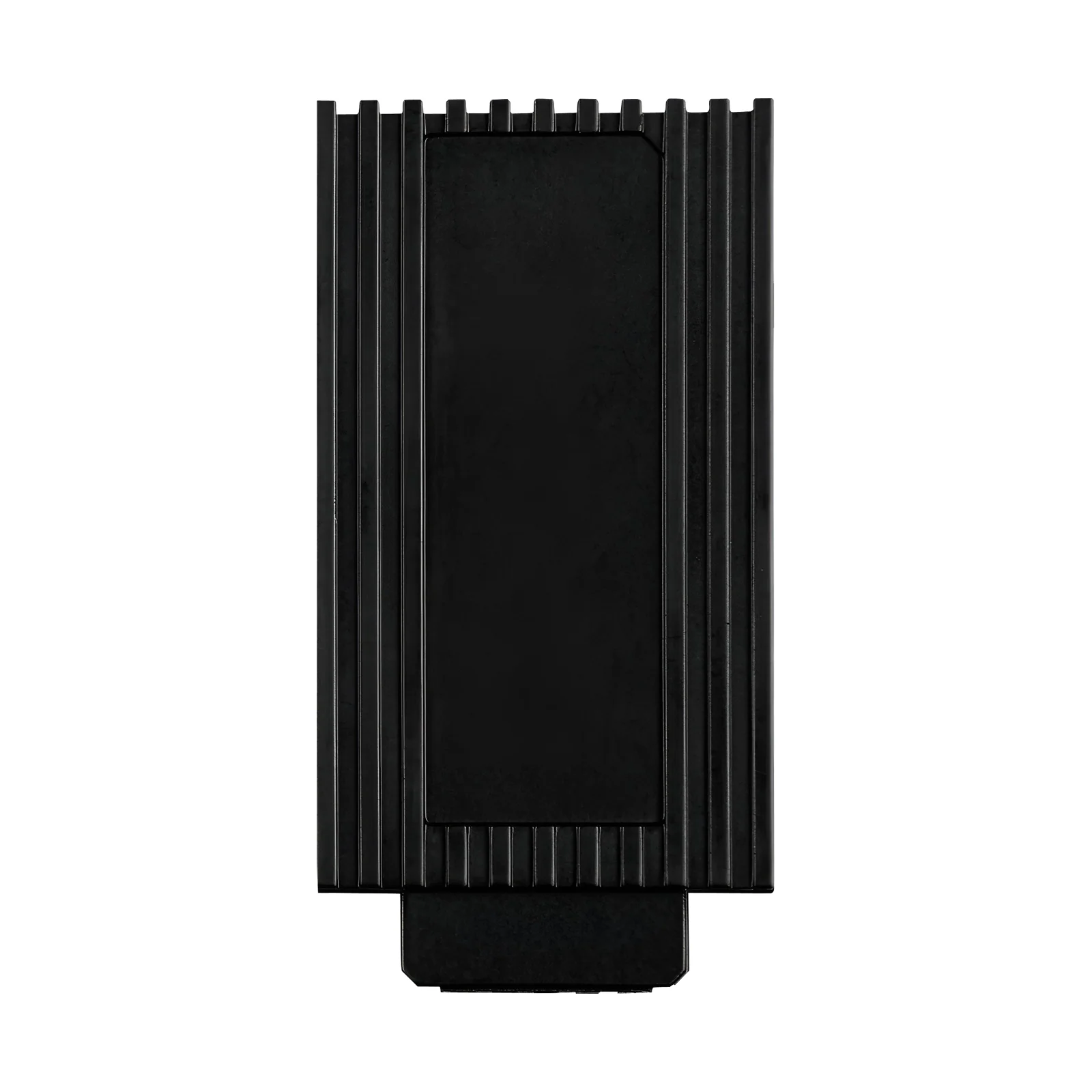
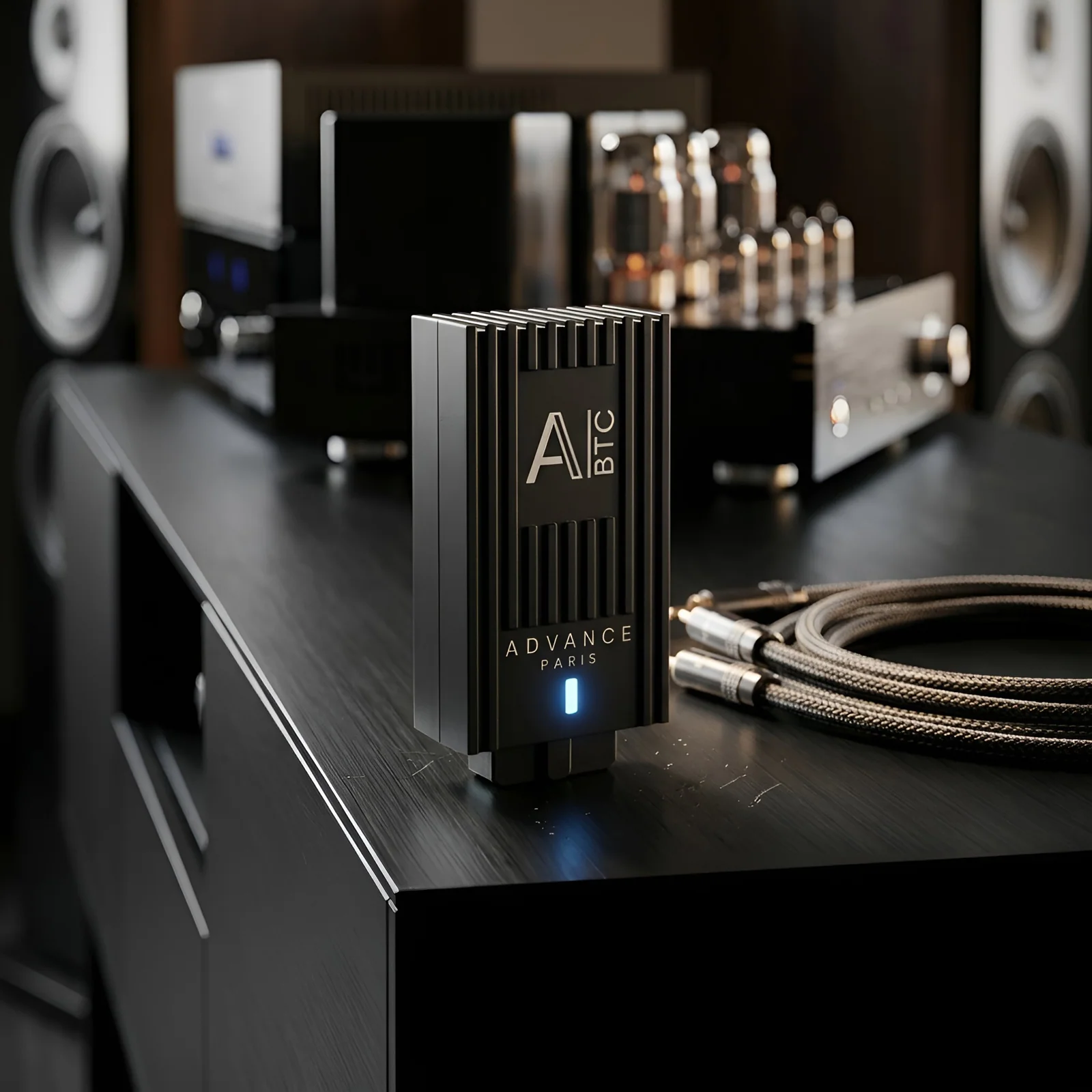
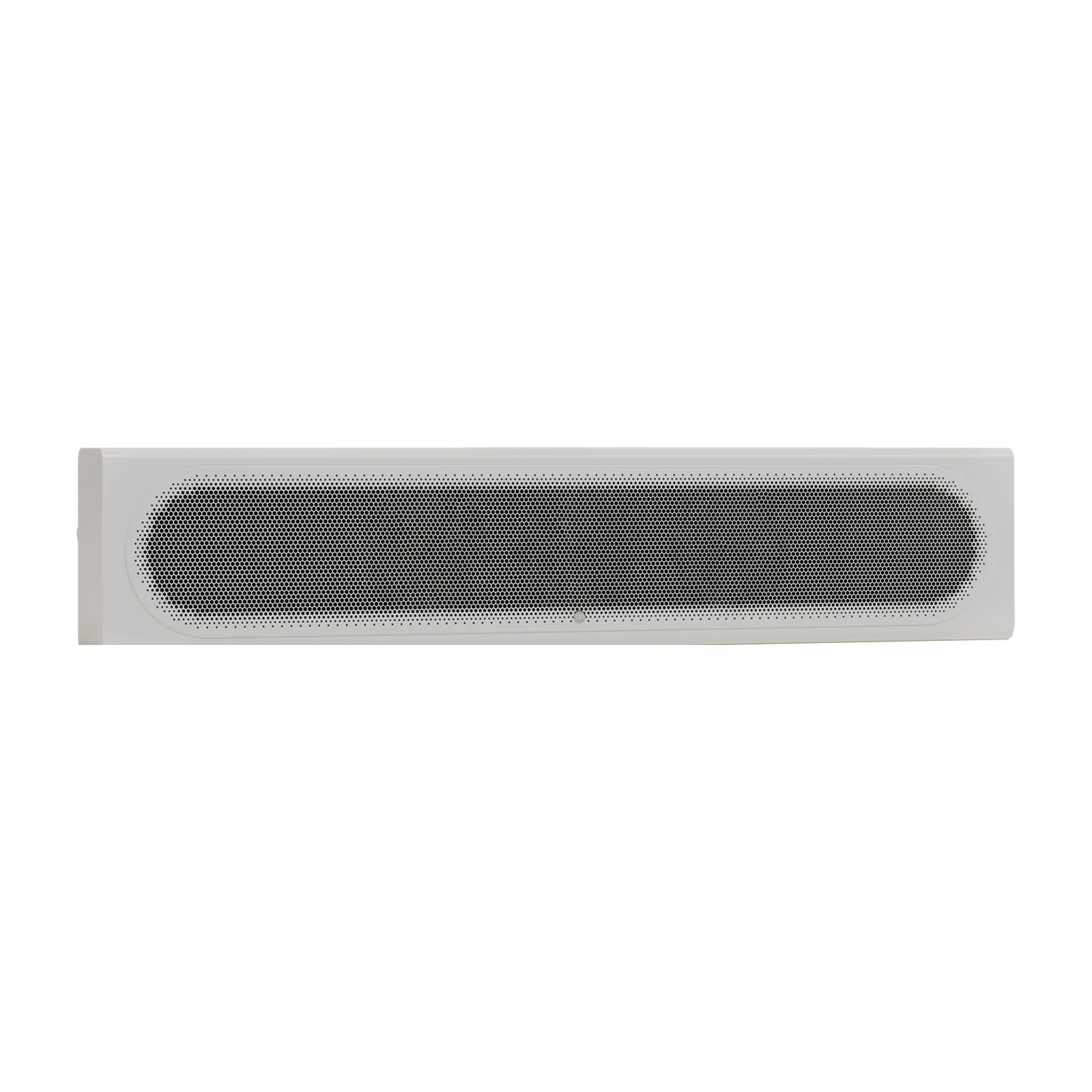
The A-BTC is a small module, about 2.2 by 1.1 inches and half an inch thick, that slots into the expansion bay on compatible Advance Paris amplifiers. Advance Paris introduced it in April 2026 as part of the five-piece NOVA range, alongside the A-i130 and A-i190 integrated amplifiers, the A-NTC streaming cartridge and the A-RTR rotary remote.
Plenty of Bluetooth adapters do their own digital-to-analog conversion with whatever small chip fits inside the housing, then hand an analog signal to your amplifier. The A-BTC does not. Advance Paris calls the approach Direct Path: the received Bluetooth data goes straight to the amplifier’s own converter. On a NOVA amplifier that means the ESS DAC you already paid for handles the job.
Codec support is the other half of the story, and the A-BTC covers three that matter. aptX HD handles higher-resolution streaming. aptX Adaptive adjusts to changing conditions rather than dropping to a lower-quality fallback. aptX Low Latency is the one for video: it keeps audio tight to the picture, which is the difference between a watchable film and a distracting one.
There is one more job the A-BTC does. The A-RTR rotary remote talks to the amplifier wirelessly through this module, so if a rotary remote is part of your plan, the A-BTC is what makes it work.
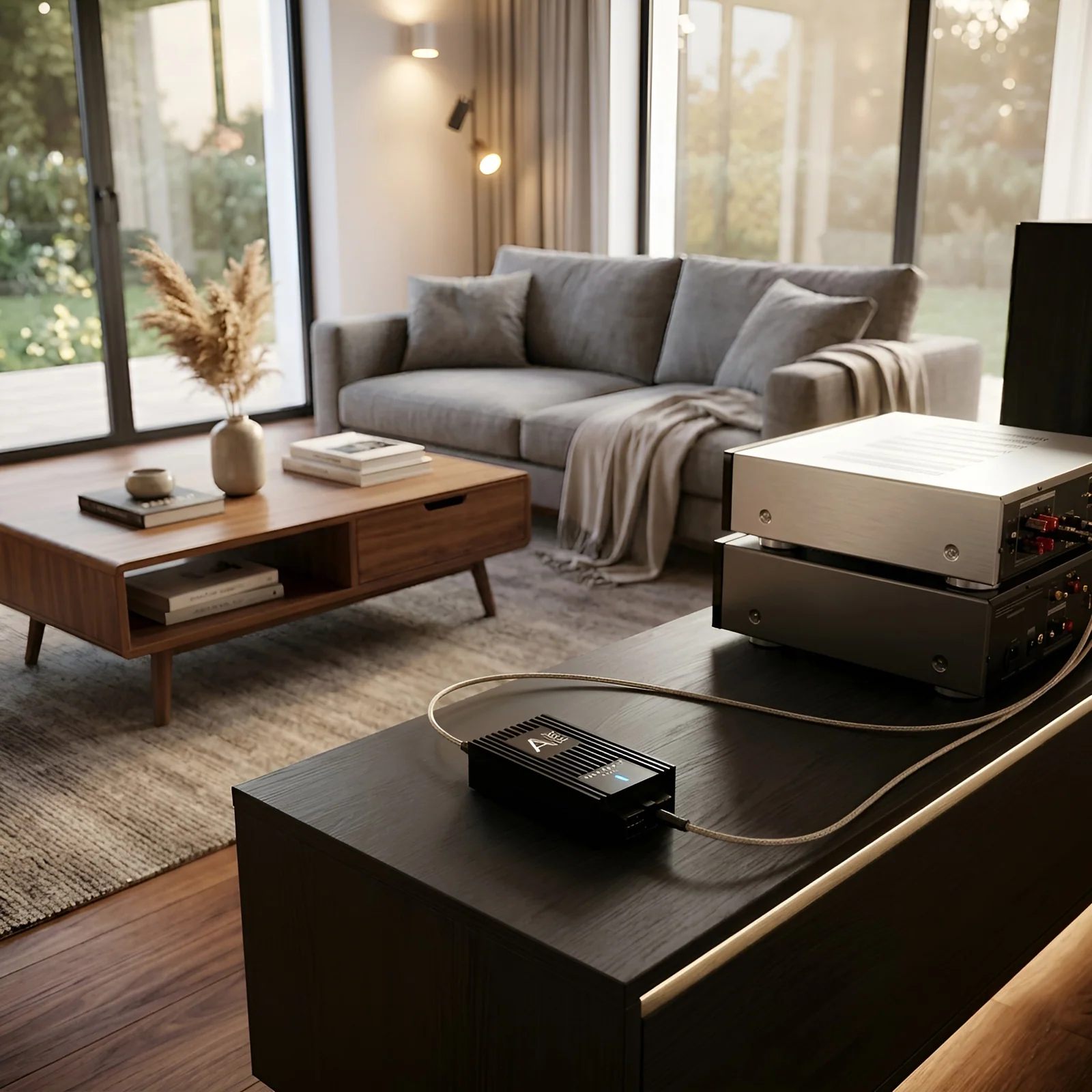
There is nothing to wire and no power supply to find. The module slides into the expansion slot on the back of a compatible Advance Paris amplifier, and the amplifier powers it. Switch the amplifier on, pair your phone the way you would pair any Bluetooth device, and the Bluetooth input appears alongside the amplifier’s other sources.
For headphone duty, you pair in the other direction, putting your headphones into pairing mode and letting the amplifier find them. One slot, two jobs, no extra box on the shelf.
Here is what usually goes with it.
The NOVA A-i130 and A-i190, which have the expansion slot it was designed around. Advance Paris also lists an A-BTC input on APEX models including the A10 and A12, so check your amplifier’s rear panel for the socket before ordering.
The module receives and transmits. It receives audio from a phone, tablet or computer, and it transmits audio from a source connected to your amplifier out to Bluetooth headphones.
Advance Paris names aptX HD, aptX Adaptive and aptX Low Latency. Your phone or headphones have to support the same codec for it to be used, and most will fall back to a standard one if not.
Yes. The A-RTR communicates with the A-i130 and A-i190 wirelessly through the A-BTC, so the module has to be installed for the remote to work.
No. The A-BTC is Bluetooth only. Network streaming is the job of the separate A-NTC cartridge, which fits the same kind of slot.
Want to learn more about Bluetooth codecs, wireless headphones, or building a system around an integrated amplifier? Visit our Learning Center for guides, tips, and expert advice.

Choose which cookies you'd like to allow. Necessary cookies keep the site working and can't be switched off.