{{ variable.name }} : {{ variable.values[selectedVariantsIndex[variable_index]].name }}
Quantity:
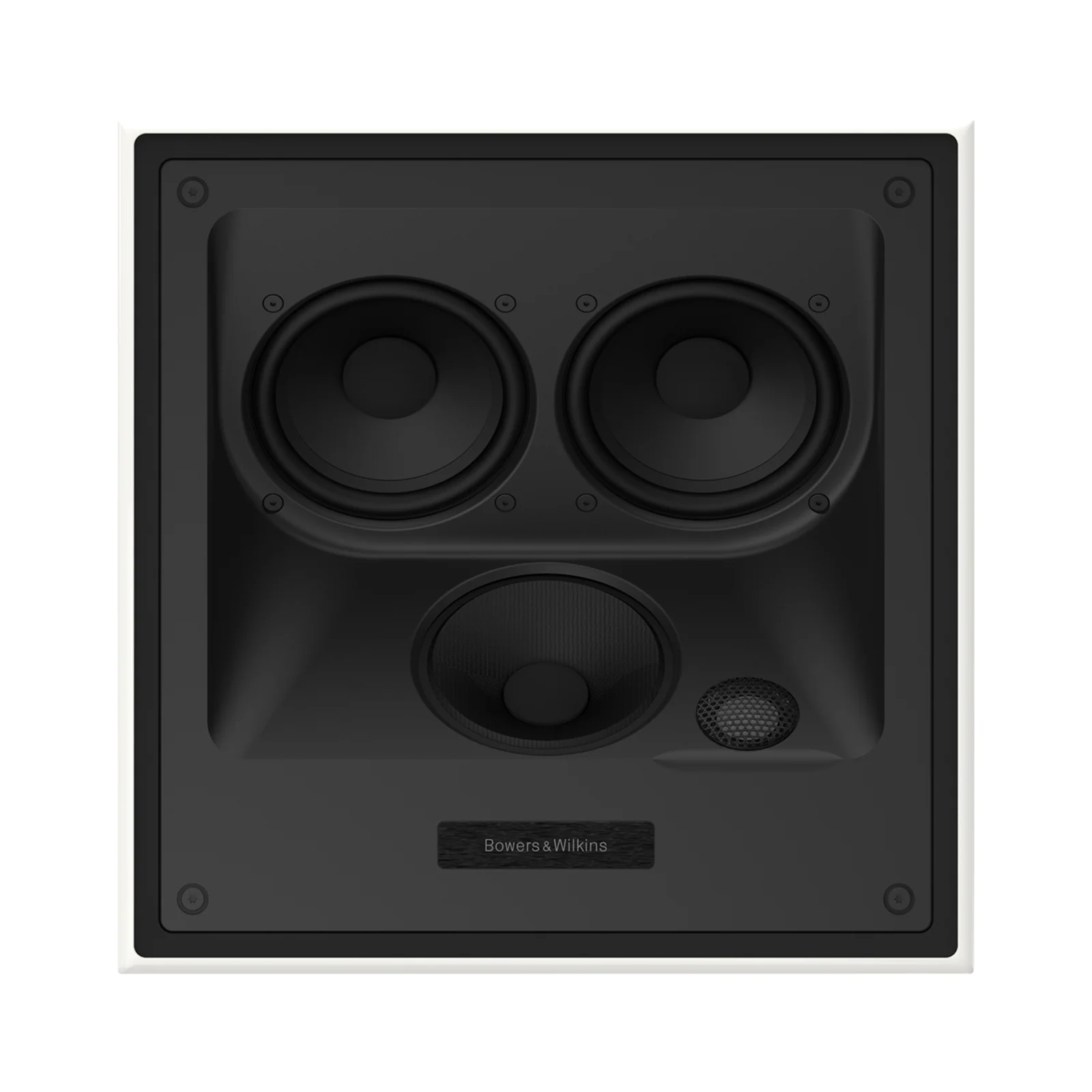
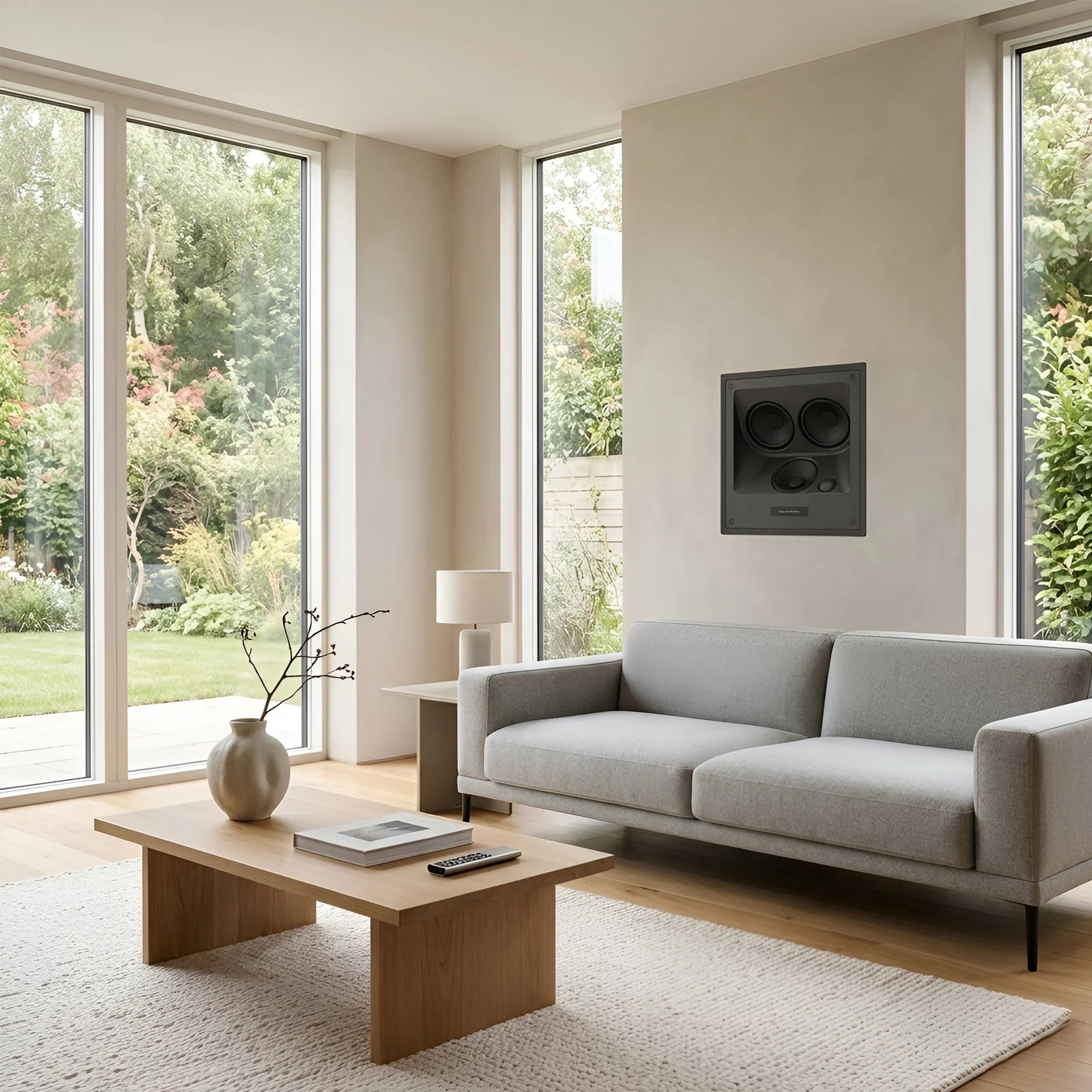
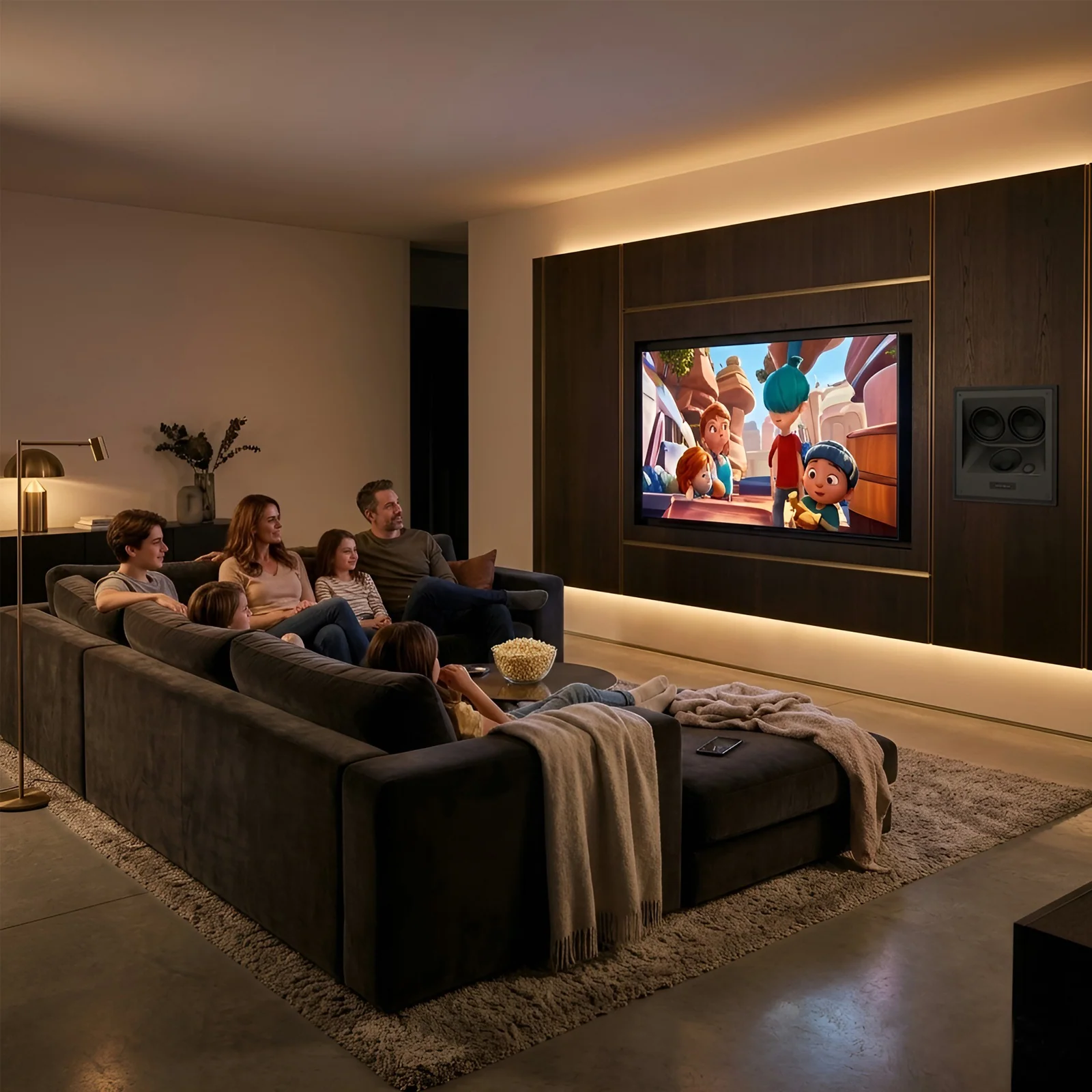
The usual problem with a ceiling speaker is obvious once you hear it. The drivers point straight down, so dialogue arrives from above your head instead of from the picture. The Bowers & Wilkins CCM7.3 S2 angles its baffle to fix that, aiming the sound down and forward toward where you actually sit.
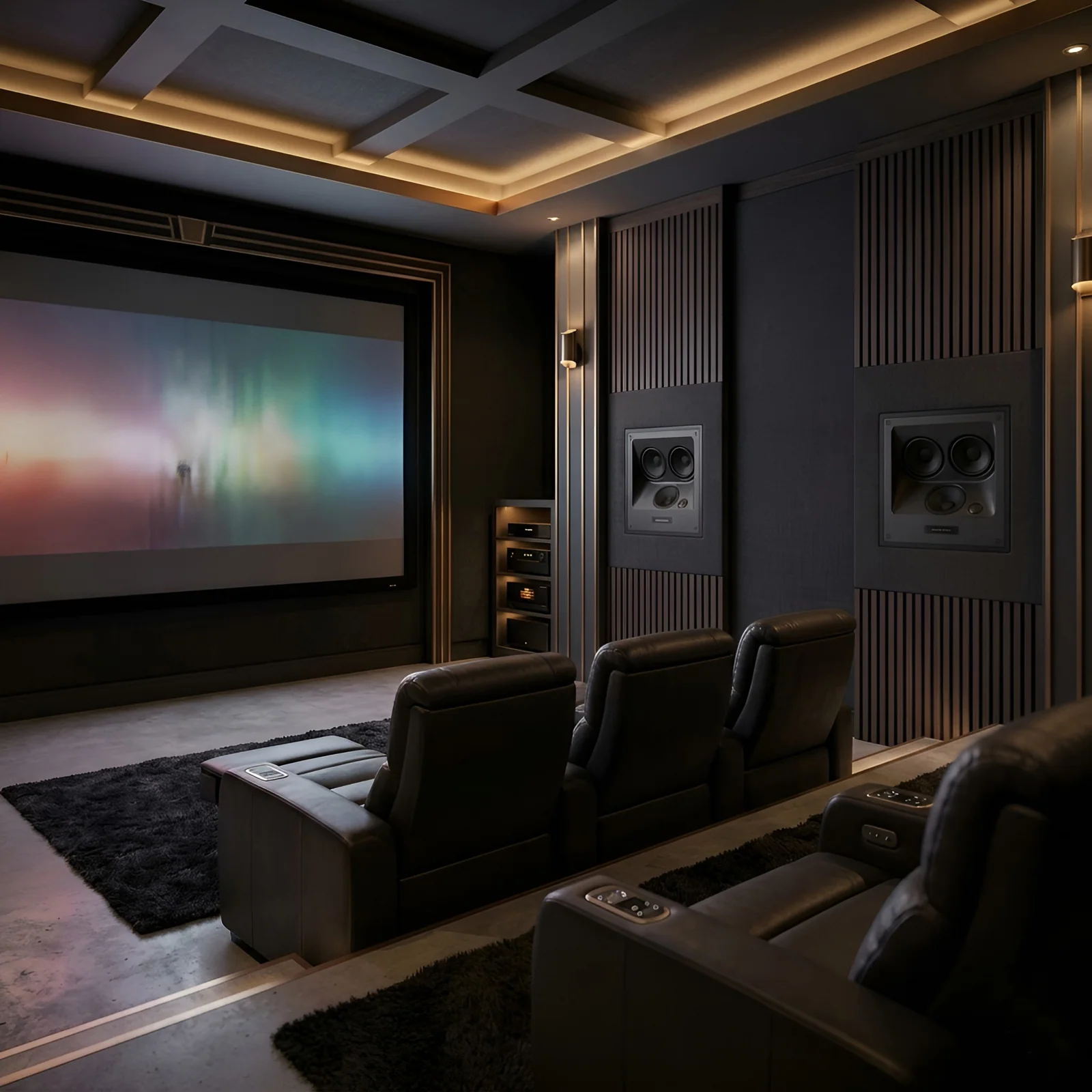
That makes it unusual: you can use it as a left, right or center channel in a system where the whole front stage lives overhead. It is a three-way design with a 1-inch Carbon Dome tweeter, a 4-inch Continuum cone FST midrange, and two 5-inch Aerofoil Profile bass drivers, all technologies Bowers & Wilkins developed for its floorstanding speakers.
Response runs from 55 Hz to 28 kHz within 3 dB, with −6 dB points at 52 Hz and 33 kHz. Sensitivity is 90 dB. The frame is 355 mm square, about 14 inches, and each speaker weighs around 9 kg. It is sold singly.
Each driver here is doing a specific job. Continuum is the woven cone material Bowers & Wilkins uses in place of Kevlar, paired with FST, a fixed-suspension design with no conventional rubber surround. The Aerofoil bass cones vary in thickness across their surface to stay rigid under load. The Carbon Dome tweeter pushes its first breakup mode well above the audible band.
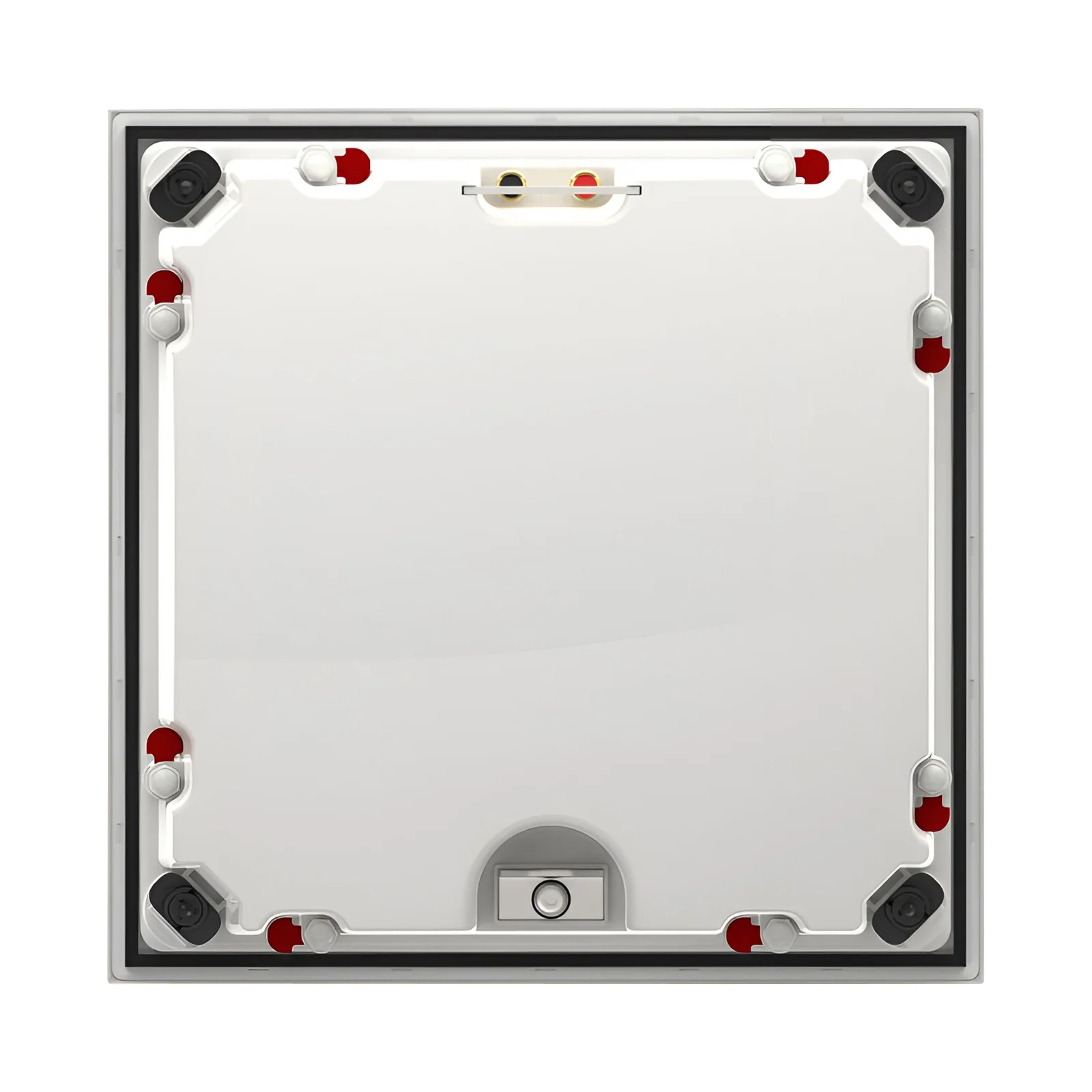
The part installers care about most is the integrated back box. Most in-ceiling speakers fire into the cavity above your ceiling, so the sound depends on the size and contents of that cavity, and some of it leaks into the room upstairs. A sealed enclosure removes both problems. It also makes the CCM7.3 S2 easy to retrofit, since you are not relying on what is behind the drywall.
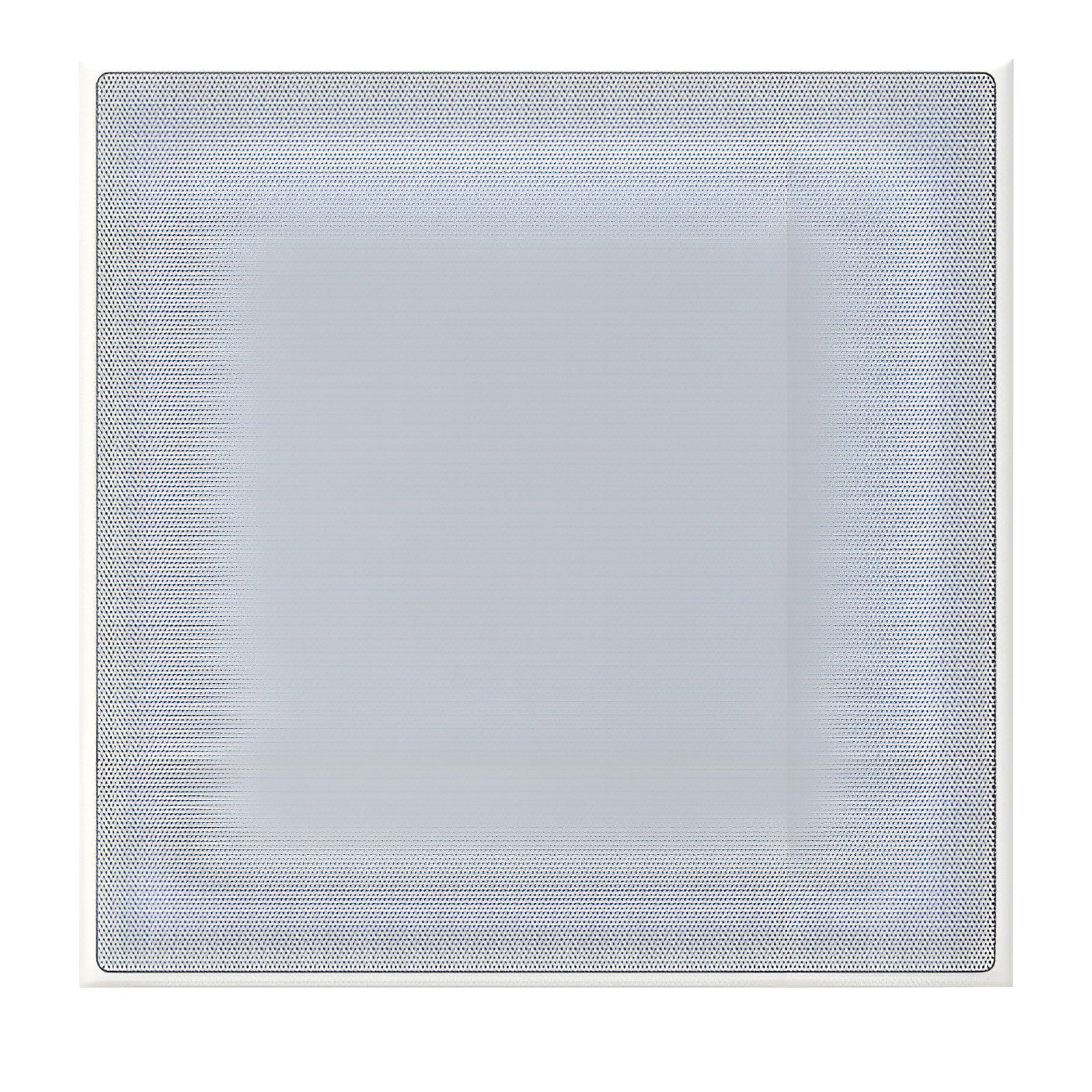
The baffle is glass-reinforced ABS, and the magnetic grille is primed white and paintable.
Cut a 332 mm square opening, about 13-1/4 inches, and allow roughly 195 mm of depth behind the ceiling for the back box. Check your joist spacing before you cut, because a 14-inch frame needs real clearance. Run speaker cable to the position first, terminate at the binding posts, then fit the speaker and clip on the grille.
Electrically it is an easy load: 8 ohms nominal, with Bowers & Wilkins recommending 25 to 200 watts of unclipped power. Measure twice, cut once, and paint the grille before it goes up.
Here is what usually goes with it.
In-ceiling. Bowers & Wilkins describes it as a three-way in-ceiling system, and the angled baffle is designed for overhead mounting. The in-wall model in the same family is the CWM7.3 S2, which uses 6-inch bass drivers.
Yes, integrated, so there is nothing extra to buy or build. It also reduces how much sound passes through to the space above.
332 mm square, roughly 13-1/4 inches, with the visible frame measuring 355 mm. Allow about 195 mm of depth for the enclosure.
No, each one is sold individually. A stereo zone needs two, and an overhead front stage needs three.
Yes. The magnetic grille arrives primed white and is designed to be painted to match your ceiling.
For film, plan on one. Two 5-inch drivers in a sealed box reach to 52 Hz, which covers music well but leaves the bottom octave to a sub.
Want to learn more about in-ceiling speaker placement, home theater layouts, or matching a subwoofer? Visit our Learning Center for guides, tips, and expert advice.
Choose which cookies you'd like to allow. Necessary cookies keep the site working and can't be switched off.