{{ variable.name }} : {{ variable.values[selectedVariantsIndex[variable_index]].name }}
Quantity:
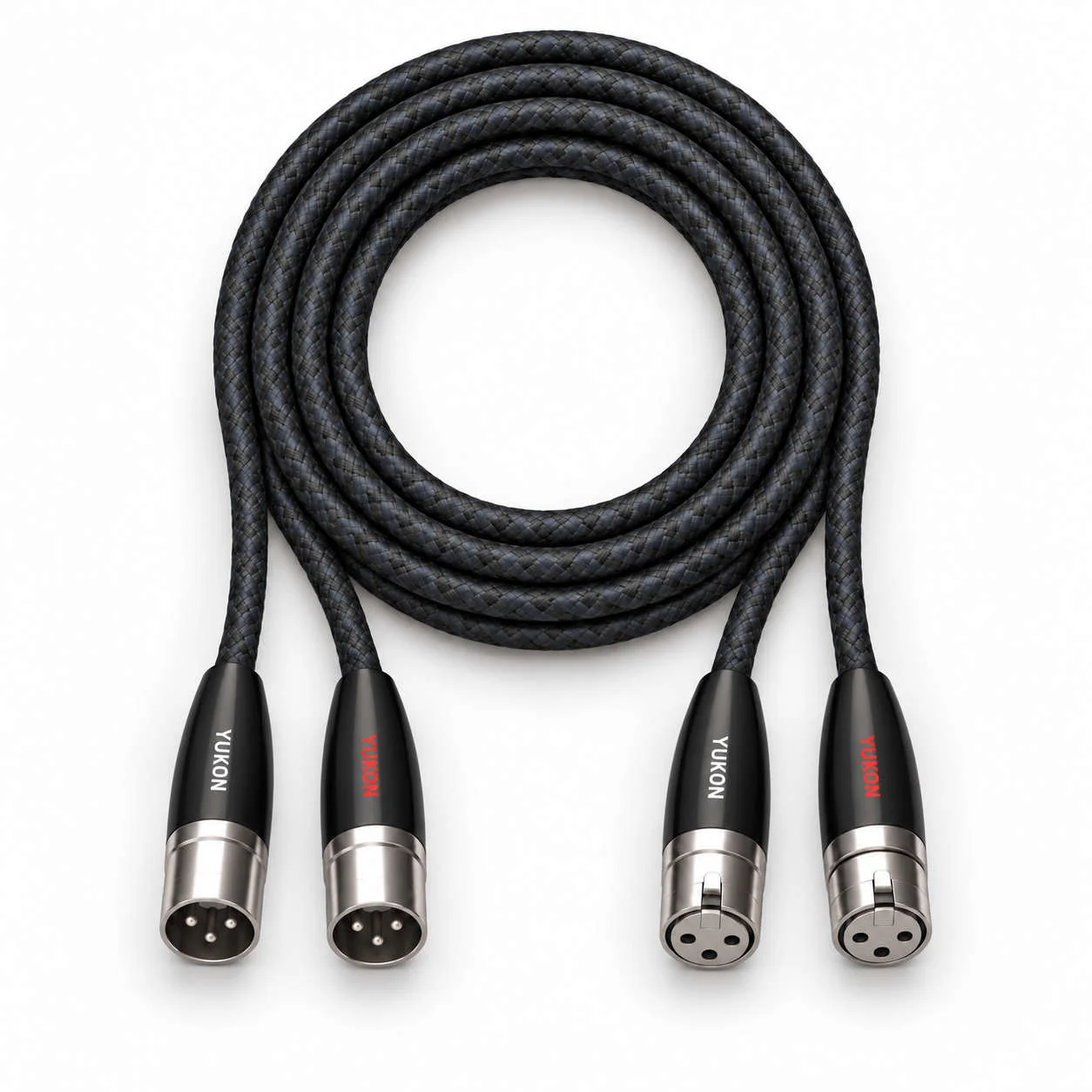
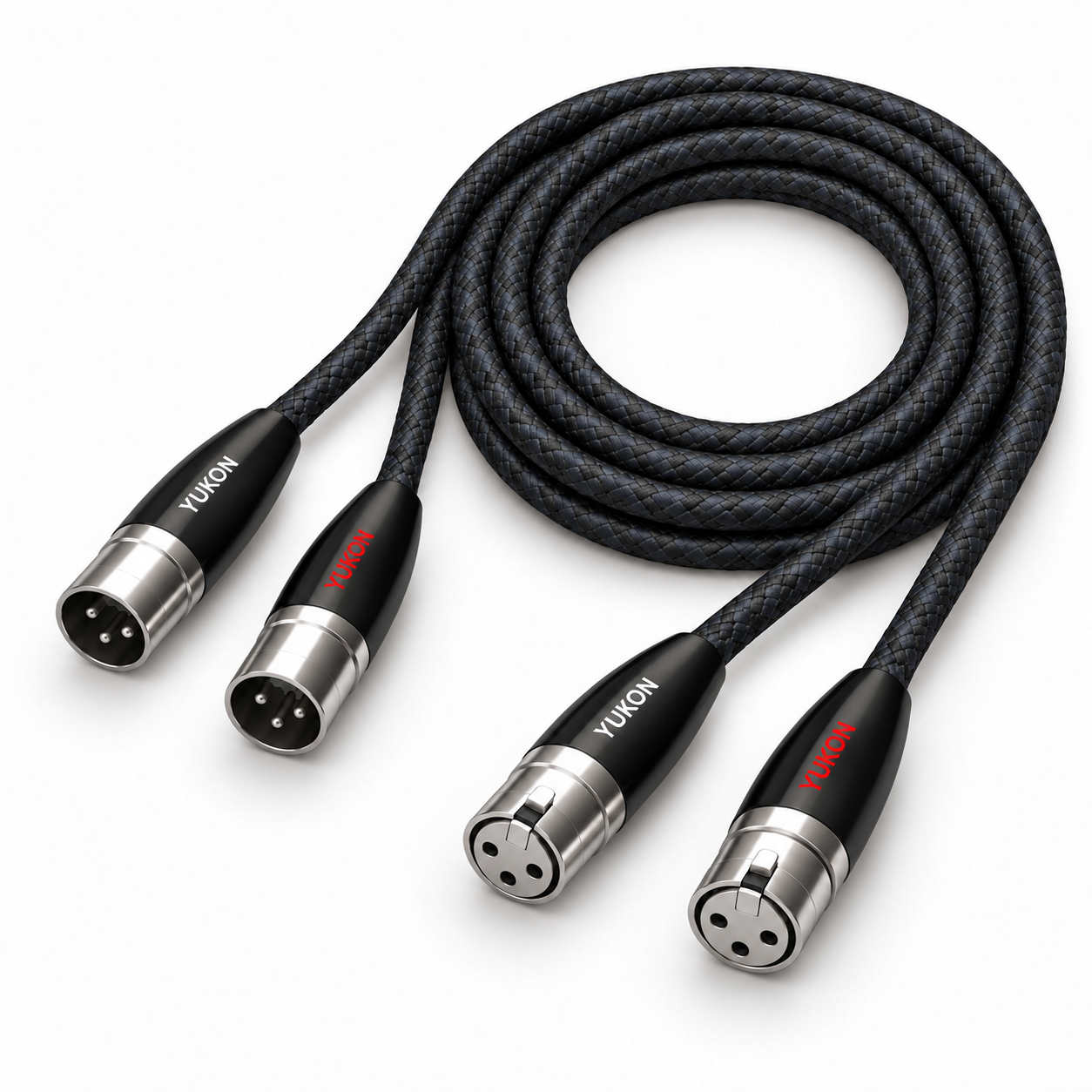
AudioQuest's Yukon is the most refined cable in the Rivers series. It is a two-cable design, one lead per channel. It takes the Mackenzie recipe one step further: the copper moves out of foam and into tubes of air.
Other length & termination options are available. Call us to discuss your needs.
The wires are solid Perfect-Surface Copper+, AudioQuest's highest grade of copper, which it calls PSC+. The wire is drawn with an ultra-smooth surface, and AudioQuest says this cuts the distortion caused by grain boundaries. Solid wire also removes strand interaction.
The wire is also direction-controlled. AudioQuest says drawn wire has a grain with a direction. It listens to every batch, picks the direction, and marks the jacket with arrows. Point the arrows at the amplifier and noise drains where AudioQuest intends.
Each wire runs inside a Polyethylene Air-Tube. The wire touches almost nothing but air. Air stores almost no signal energy, and AudioQuest says this leaves far less of the out-of-focus effect that solid insulation causes.
The layout is what AudioQuest calls Triple-Balanced. A third wire carries the ground on its own. The shield never has to double as a signal path. AudioQuest says both signal legs then travel equally clean routes.
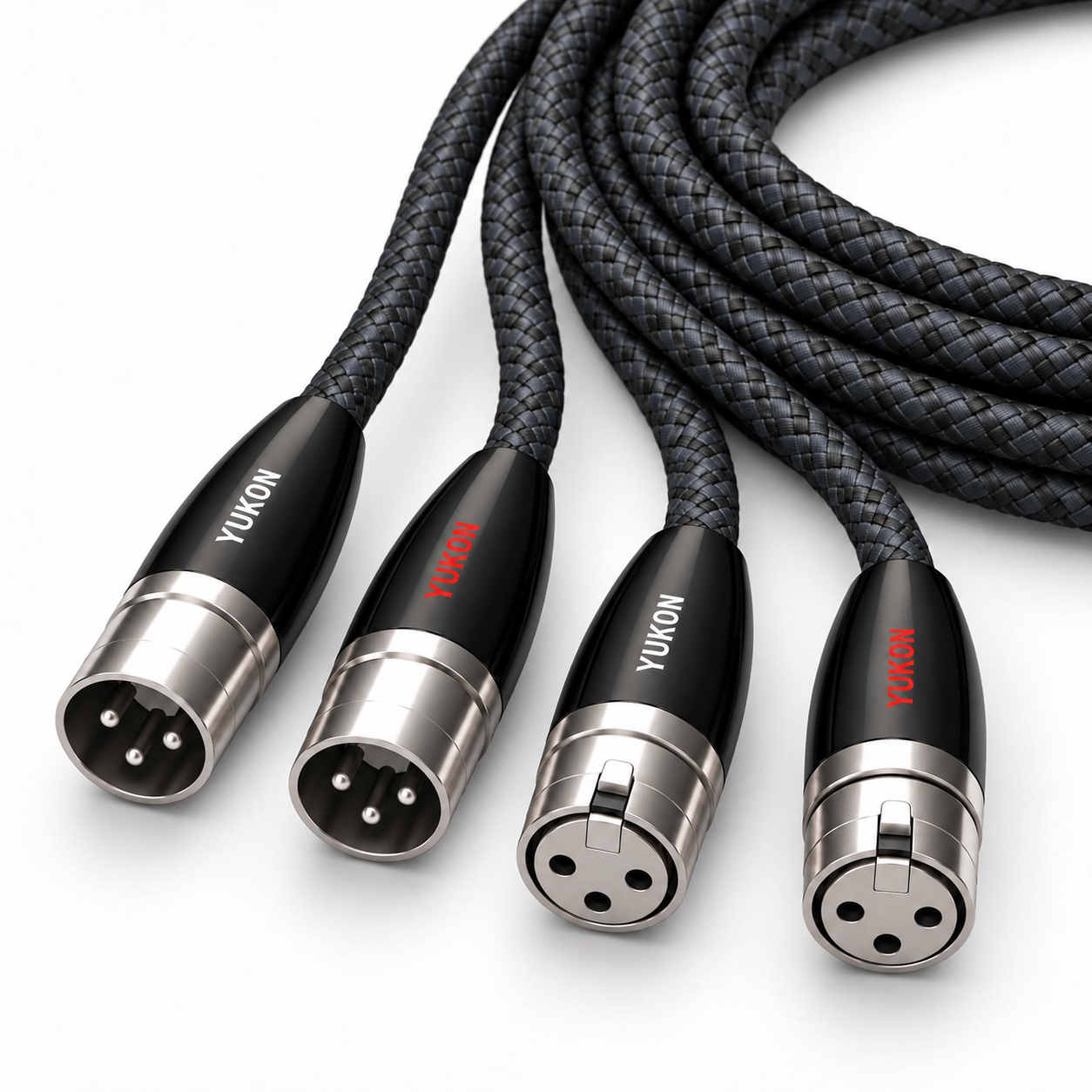
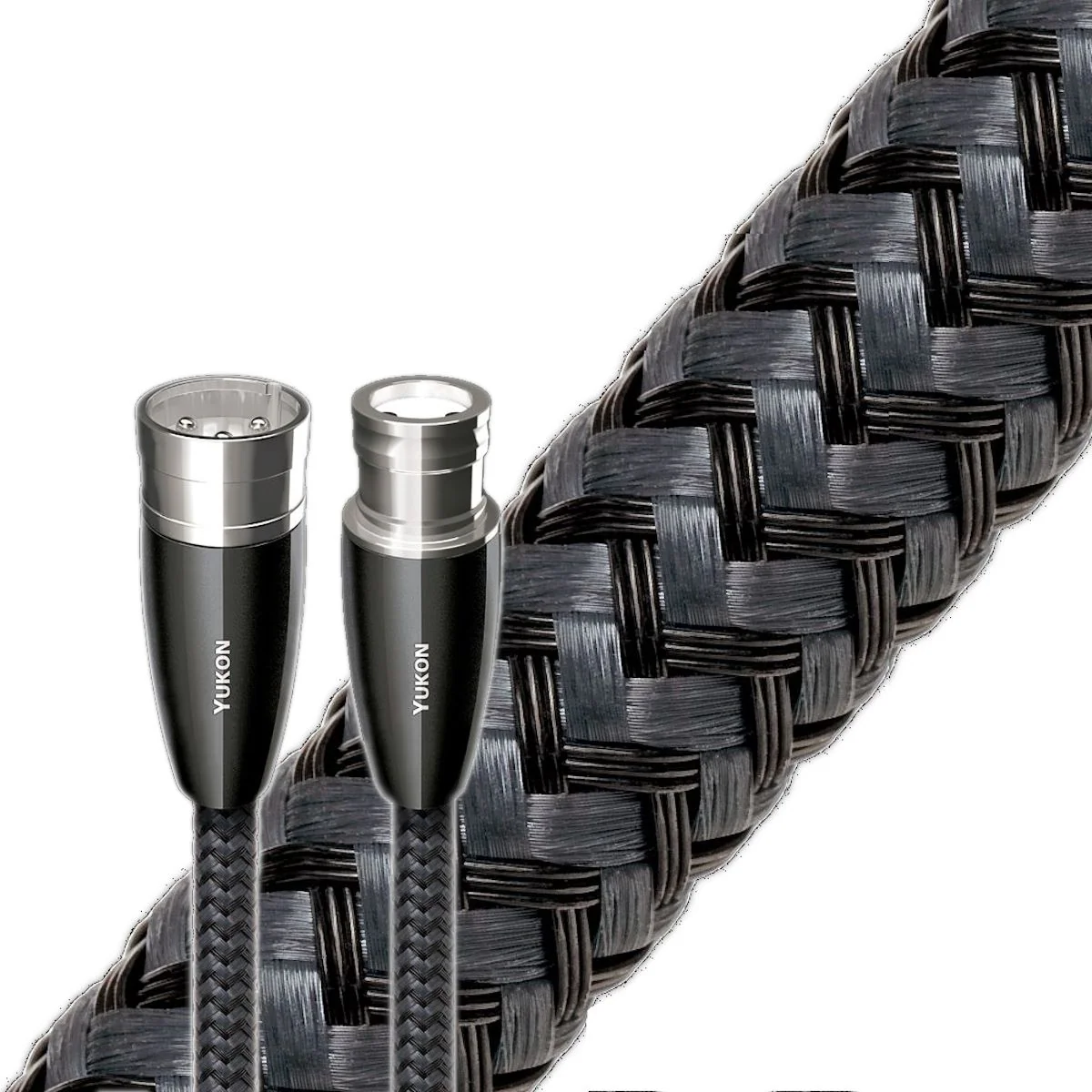
Yukon ends in AudioQuest's Hanging-Silver XLR plug. The body is pure Purple Copper. The parts hang in the plating bath instead of tumbling, which AudioQuest says gives a more even coat of silver. The plug is cold welded to the wire, so there is no solder in the path. It latches into the jack.
Around the cable is a three-layer shield with a carbon layer. AudioQuest calls it Carbon-Based 3-Layer Noise-Dissipation. An ordinary shield drains radio noise into the ground, and AudioQuest says that dirties the reference the signal is measured against. The carbon layers soak up the noise first.
Christiaan Punter reviewed the RCA version for HiFi-Advice on December 9, 2015 and called Yukon "very open and airy. It really digs out the smallest details, without ever sounding harsh."
He summed it up as a "very natural sounding cable" with "a very open, airy, and refined sound." The upper bass, he noted, could carry more substance.
Run Yukon from a balanced XLR output on your DAC, streamer, CD player or phono stage to a balanced XLR input on your preamp or amplifier. Point the arrows on the jacket toward the amplifier. Line up the pins and push until the latch clicks.
Then listen.
Measure the route the cable will really take between your components, around shelves and behind the rack. Then add a little slack. As audio legend George Cardas puts it, "A cable that's just long enough usually turns out to be just not long enough." Keep the left and right cables the same length. We recommend a matched pair.
Balanced XLR works when both components have XLR jacks, and we recommend using XLRs whenever they do. If one component has only RCA jacks, use an RCA cable instead of an adapter. You only get the possible benefits of a balanced output with a pure XLR-to-XLR connection.
If your amplifier and speakers sit far from your source, we recommend a long interconnect over a long speaker cable. A really long interconnect affects system performance less than a really long speaker cable.
An interconnect often stays in a system for years, so it is easy to overlook. Look again when something else changes: a new DAC, streamer or phono stage, a better amplifier, or a move to components with balanced XLR jacks.
An interconnect is one link in the chain. It usually joins these categories.
The XLR version of AudioQuest's Hanging-Silver plug: silver over a body of pure Purple Copper, cold welded to the wire so no solder sits in the path.
The cable has three wires: positive, negative and a separate ground. AudioQuest says this keeps the shield out of the signal path, so both signal legs travel equally clean routes.
AudioQuest says any solid next to a wire stores some signal energy and releases it late as distortion. Air stores almost none, so a tube of air keeps the signal cleaner than the foam in Mackenzie.
Toward the component that receives the signal, normally the amplifier or preamp. AudioQuest sets the direction of the wire and says the arrows let noise drain the right way.
A limited lifetime warranty to the original owner, for cables bought from an authorized US dealer. AudioQuest will repair or replace a defective cable that has not been abused. Keep your proof of purchase.
AudioQuest Black Beauty XLR is the next rung. It moves to AudioQuest's Mythical Creatures family, with ZERO-Tech, a carbon and graphene mesh and Hanging-Silver plugs over Red Copper.
The most popular configurations are shown on this page. If your system requires a different length or termination, call our audio experts. We’ll help you choose the right configuration and arrange a custom cable for your system.
Want to learn more about interconnects, solid-core cables, or RCA versus XLR? Visit our Learning Center for guides, tips, and expert advice.

Choose which cookies you'd like to allow. Necessary cookies keep the site working and can't be switched off.