{{ variable.name }} : {{ variable.values[selectedVariantsIndex[variable_index]].name }}
Quantity:
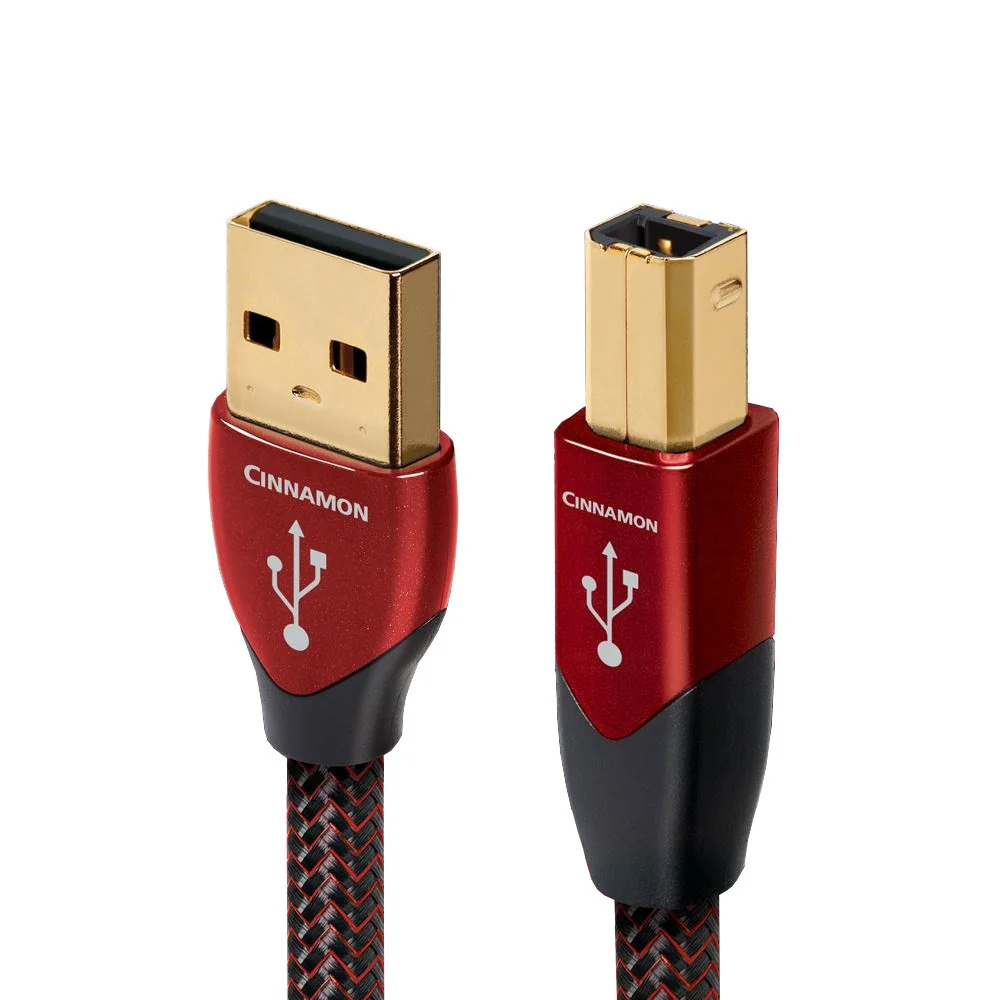
AudioQuest's Cinnamon is the third rung of its USB cables. Its conductors are Long-Grain Copper with 1.25% silver plating, more than twice the silver of Forest. Hard-Cell Foam insulates them, a Metal-Layer shield wraps the pair, and a nylon braid covers the jacket.
AudioQuest says a USB signal is so high in frequency that it travels almost entirely on the surface of the conductor. The 1.25% silver layer on Cinnamon puts more silver on that surface than Forest. AudioQuest says the result is closer still to a solid silver wire. Every conductor is direction-controlled.
The insulation is Hard-Cell Foam, injected with nitrogen to form air pockets. AudioQuest says nitrogen neither absorbs nor releases energy, so the foam causes much less of the out-of-focus effect that solid insulation can. It also holds the signal pair in a fixed geometry.
Around the pair sits Metal-Layer Noise-Dissipation. AudioQuest says a plain shield drains radio noise into the ground and dirties the reference. Its metal layers catch most of that noise first. Cinnamon is a USB 2.0 cable rated to 480 megabits per second.
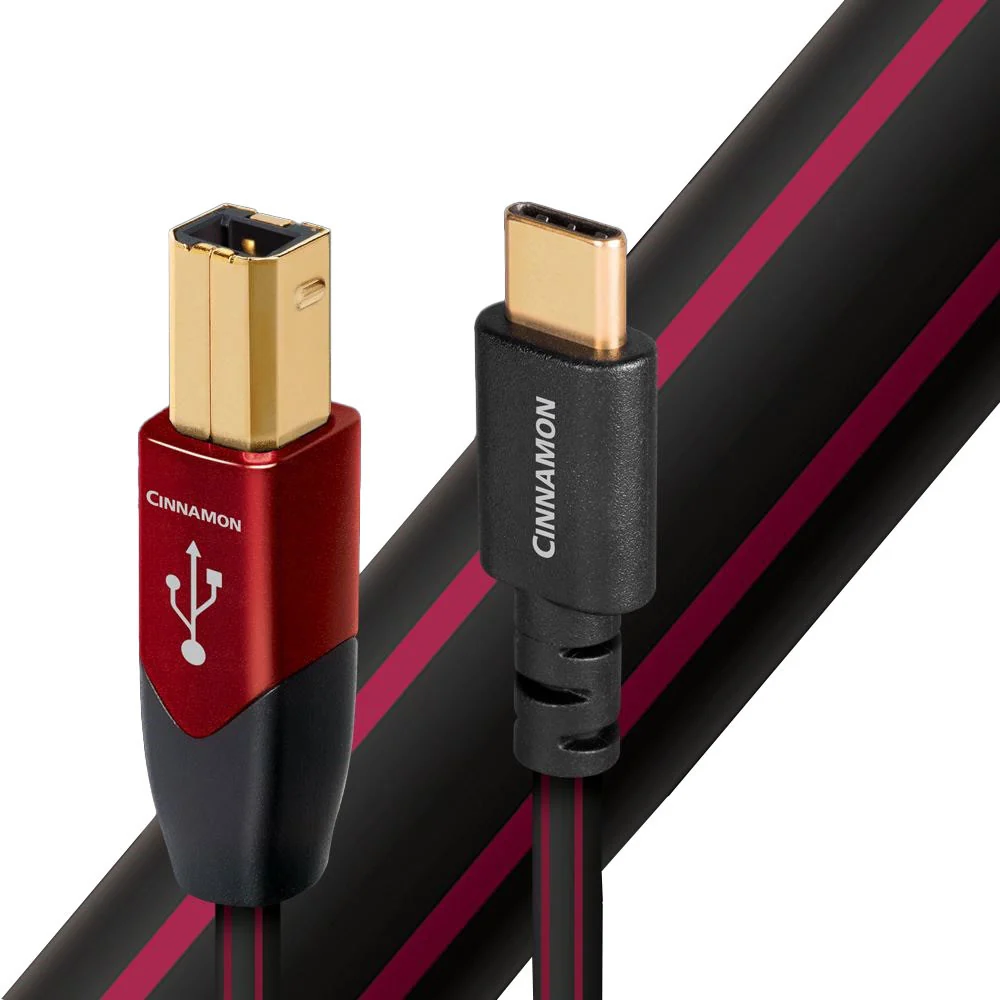
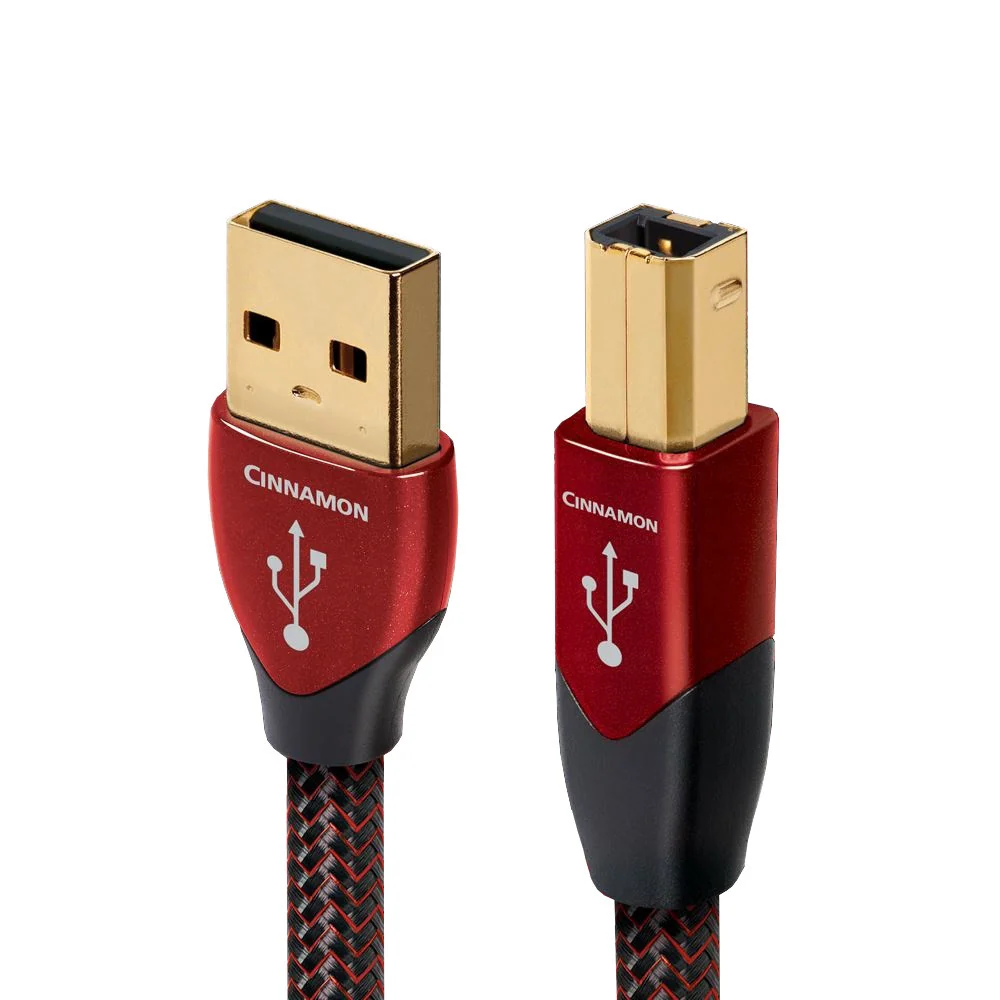
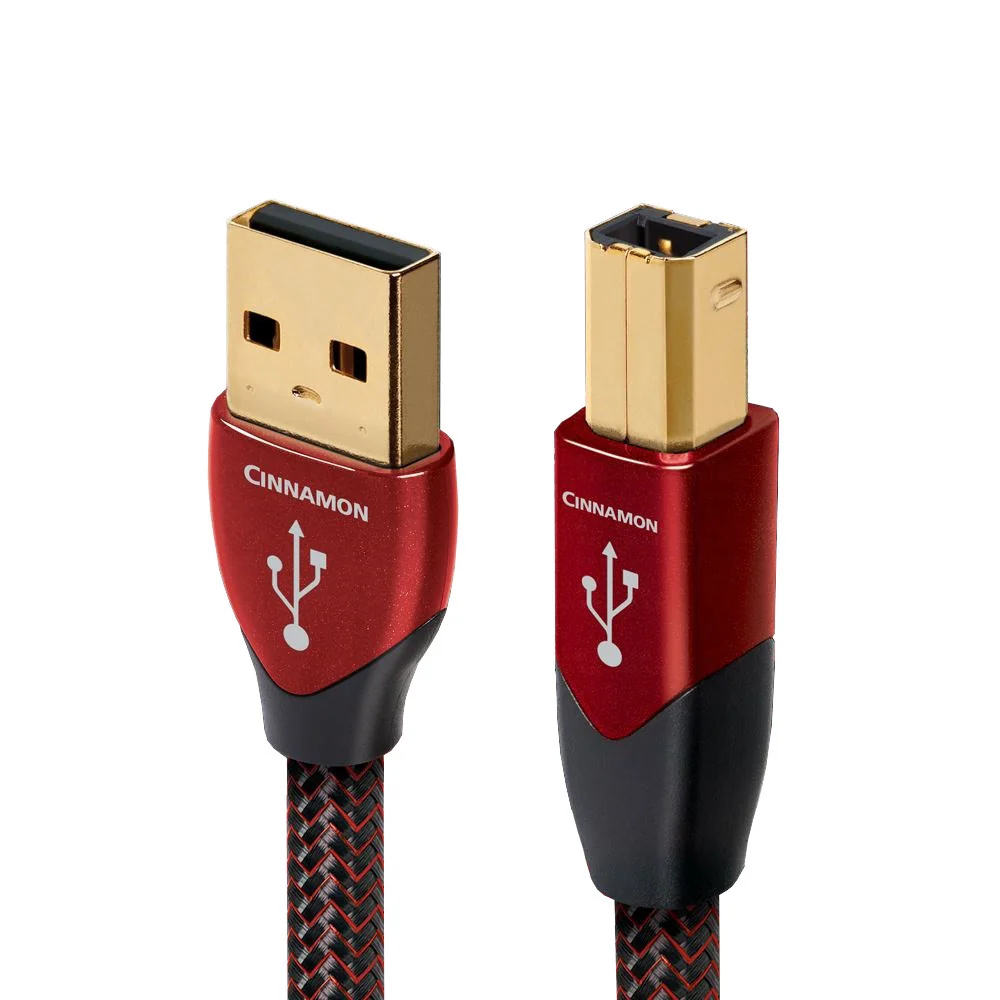
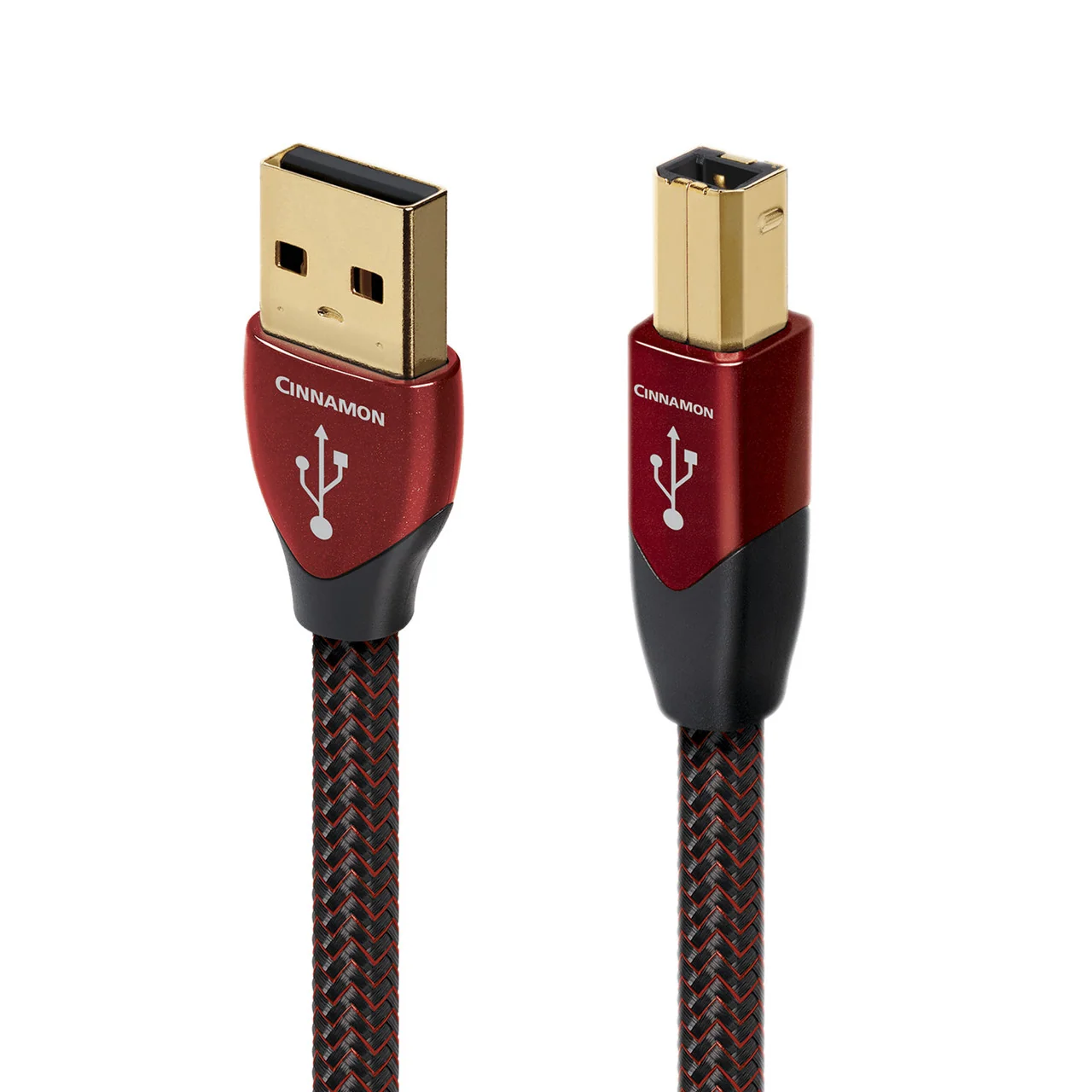
Cinnamon ends in a flat USB-A plug for the computer end and a square USB-B plug for the DAC end. USB-A is the flat plug on a computer or streamer. USB-B is the square plug on most desktop DACs. AudioQuest does not publish the plug plating. Where it applies, arrows on the connectors show which way the cable runs.
Doug Blackburn reviewed Cinnamon for SoundStage! Access on September 15, 2011. It "removed more fog, letting me clearly see the musicians and their instruments, though still not with absolute clarity," he wrote.
Glenn Young disagreed in Secrets of Home Theater and High Fidelity on August 31, 2022: "The soundstage was wider than with the Pearls, but the tone didn't seem as rich." The Cinnamon cables "just weren't knocking me out," he added.
Plug the USB-A end into your computer, streamer or server and the USB-B end into your DAC. Run any arrows on the connectors toward the DAC. Then choose the DAC as the output device in your player or system sound settings.
Then listen. Other and longer lengths available. Call for prices.
A USB cable is one link in a digital chain. It usually joins these categories.
AudioQuest says a USB signal rides almost entirely on the surface of the conductor. A silver skin on that surface behaves close to a solid silver wire at a fraction of the cost.
AudioQuest's name for its shield. Instead of letting a plain shield dump radio noise straight into the ground, the metal layers catch most of it first. AudioQuest says that keeps the ground reference clean.
Yes. AudioQuest lists 5 volts at 500 milliamps for this USB 2.0 cable, which is the standard bus-power budget. Power Delivery charging is not supported.
Where it applies, AudioQuest marks arrows on the connectors. Run them from the computer or streamer toward the DAC.
A limited lifetime warranty to the original owner, for cables bought from an authorized US dealer. AudioQuest will repair or replace a defective cable that has not been abused. Keep your proof of purchase.
AudioQuest Carbon USB is the next rung. It moves to 5% silver plating and AudioQuest's Carbon-Based 3-Layer shield.
Want to learn more about USB audio, DACs, or streaming? Visit our Learning Center for guides, tips, and expert advice.
Choose which cookies you'd like to allow. Necessary cookies keep the site working and can't be switched off.