{{ variable.name }} : {{ variable.values[selectedVariantsIndex[variable_index]].name }}
Quantity:
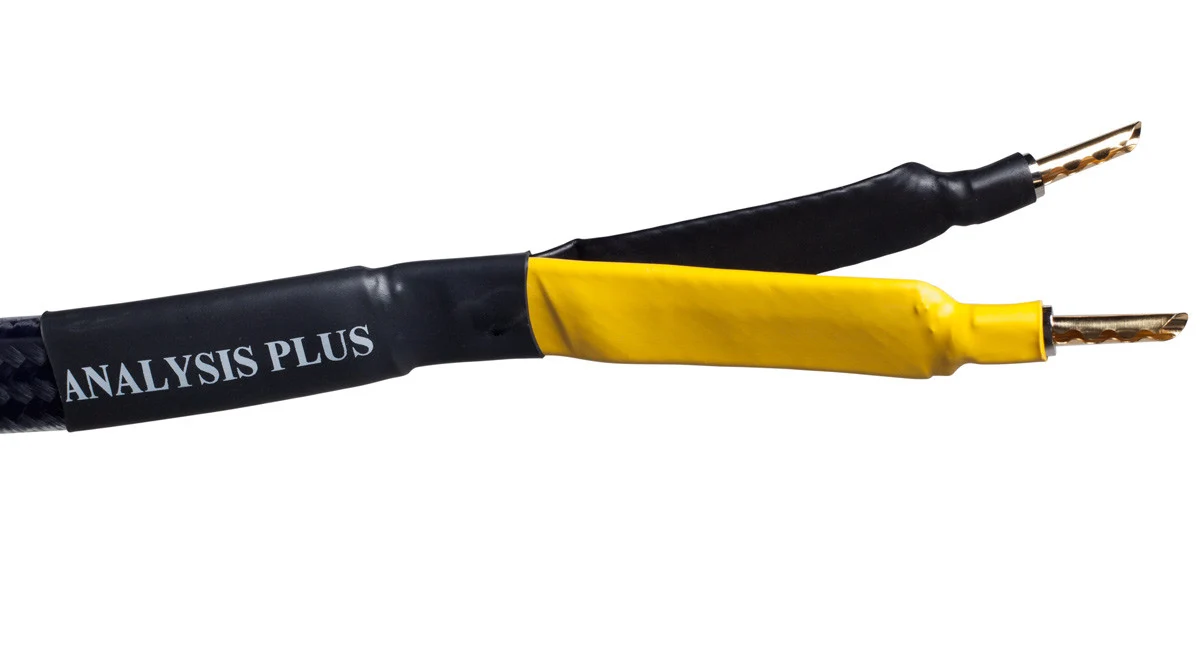
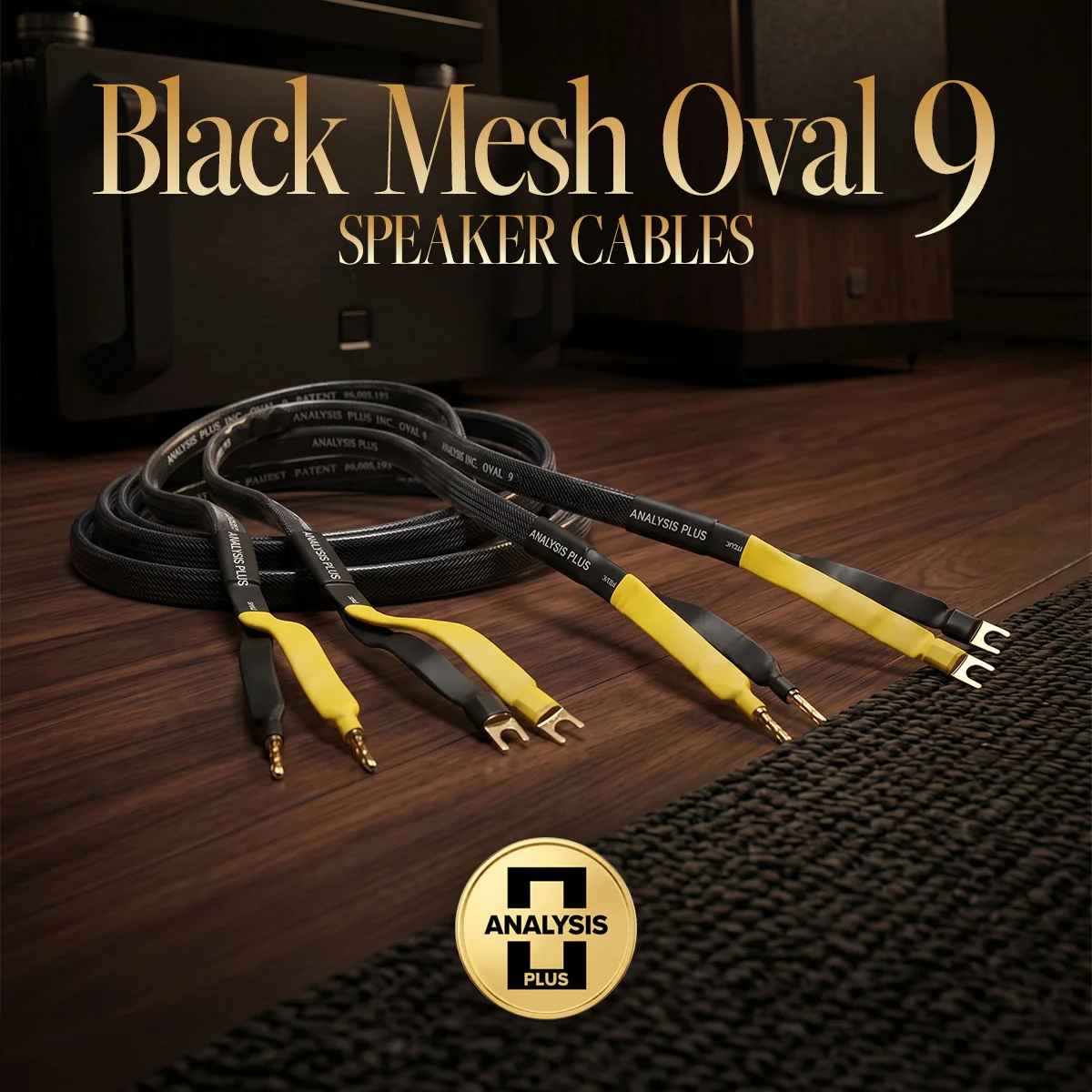
Analysis Plus calls Black Mesh Oval 9 a massive 9-gauge speaker cable, capable of handling deep bass notes played at high volume. It is the heavy-gauge member of the company's hollow oval copper family.
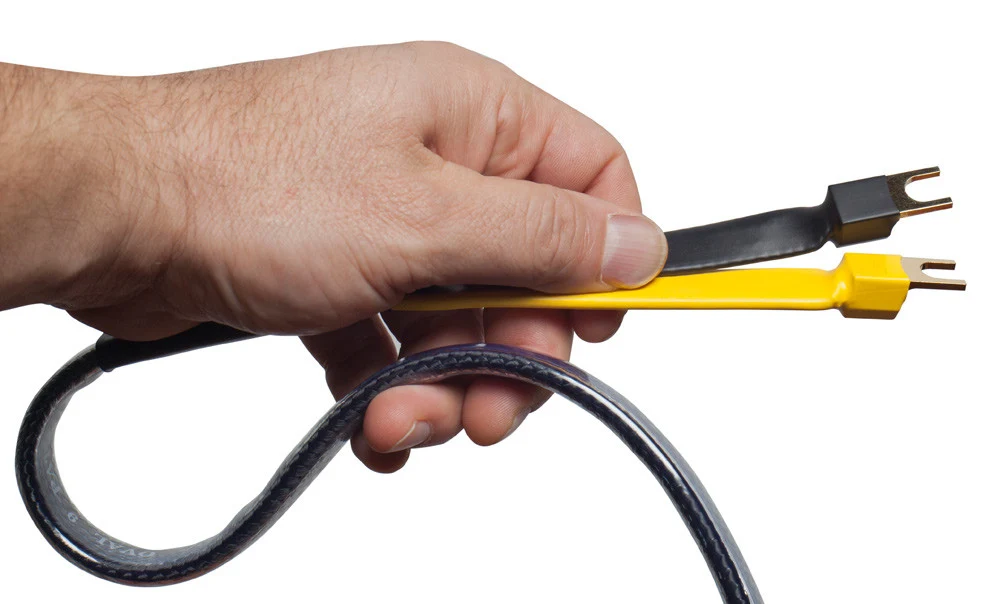
The cable measures 20mm by 8mm. Analysis Plus builds its cables by hand in Flushing, Michigan, and terminates Black Mesh Oval 9 with banana or T1 spade connectors. Analysis Plus also makes a bi-wire version.
Other length & termination options are available. Call us to discuss your needs.
At higher frequencies, current crowds toward the outer surface of a wire, Analysis Plus explains. The center carries little of the signal there, so the company leaves it out. A hollow conductor, it says, keeps resistance steadier as frequency rises, so current flows more evenly across the audio range.
Analysis Plus weaves its Oval cables so every strand sits, on average, as close to the return current as any other. The company says the oval shape cuts current bunching, also called proximity effect. It adds that a woven build resists the cracks that constant flexing can cause in solid cable.
Analysis Plus machines its T1 spade from a block of copper and gold plates it. It fits 1/4-inch to 5/16-inch binding posts and works at a 90-degree angle too. Most Black Mesh Oval 9 listings we carry use T1 spades, bananas, or one of each, and a few use pins. Each title names the connector at each end.
Connect one end to your amplifier's speaker outputs and the other to your speaker's binding posts, red to red and black to black. At 9-gauge the cable is stiff, so route it before you tighten the posts and let it settle without strain on the connectors. A single cable connects one speaker, so order one for each speaker you are wiring.
Speaker cable is cut for one room. Measure the path the cable will really take, around furniture and along the baseboard. Then add a little slack. As audio legend George Cardas puts it, "A cable that's just long enough usually turns out to be just not long enough." We recommend keeping the left and right runs the same length, even when one speaker sits closer.
Spades clamp under a binding post and hold tight. Bananas push straight in, so they connect fastest. Bare wire fits almost anything, but we suggest avoiding it. Bare copper oxidizes quickly, and copper oxide is not a good conductor. If you use bare wire, re-strip the ends when the copper darkens.
A bi-wire cable has four connectors at the speaker end instead of two. It is made for speakers with two pairs of binding posts. Your speaker's manual shows which links to remove.
Tighten the connections, power up, and play something you know well.
Speaker cable often stays put for years, so it tends to be the last thing upgraded. Look again when something else changes. Moving from bookshelf speakers to floorstanders is the big one. In our experience, about nine in ten people who make that move keep their old speaker cable. A stronger amplifier, a longer run, or darkened ends are the other signs.
A speaker cable joins your amplifier to your speakers. These are the categories on either end of it.
Yes. Every Black Mesh Oval 9 listing we carry comes ready to connect. Its title names what is on each end.
It is 9-gauge. Analysis Plus calls it massive, and says that size lets it handle deep bass notes played at high volume.
Most likely. Analysis Plus says the T1 fits 1/4-inch to 5/16-inch binding posts and works at a 90-degree angle too.
If the ends are marked for amplifier and speaker, connect them that way. If they are not marked, either end can go to either component.
Analysis Plus Silver Oval 2 is the next step up, layering pure silver over copper in a 12-gauge hollow oval surrounded by a second one, with shielding.
The most popular configurations are shown on this page. If your system requires a different length or termination, call our audio experts. We’ll help you choose the right configuration and arrange a custom cable for your system.
Want to learn more about speaker cables, speaker placement, or matching an amplifier to your speakers? Visit our Learning Center for guides, tips, and expert advice.
Choose which cookies you'd like to allow. Necessary cookies keep the site working and can't be switched off.
