{{ variable.name }} : {{ variable.values[selectedVariantsIndex[variable_index]].name }}
Quantity:
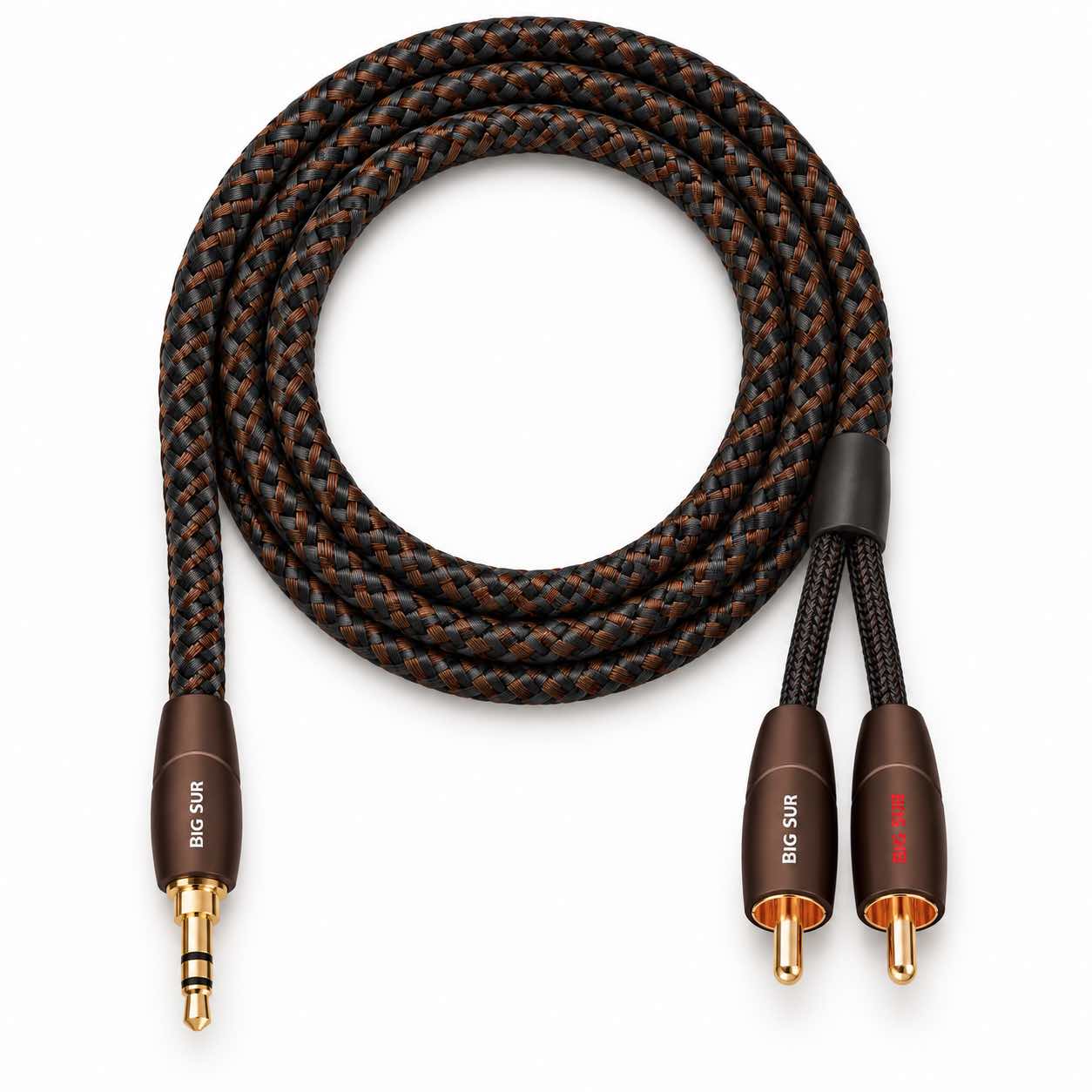
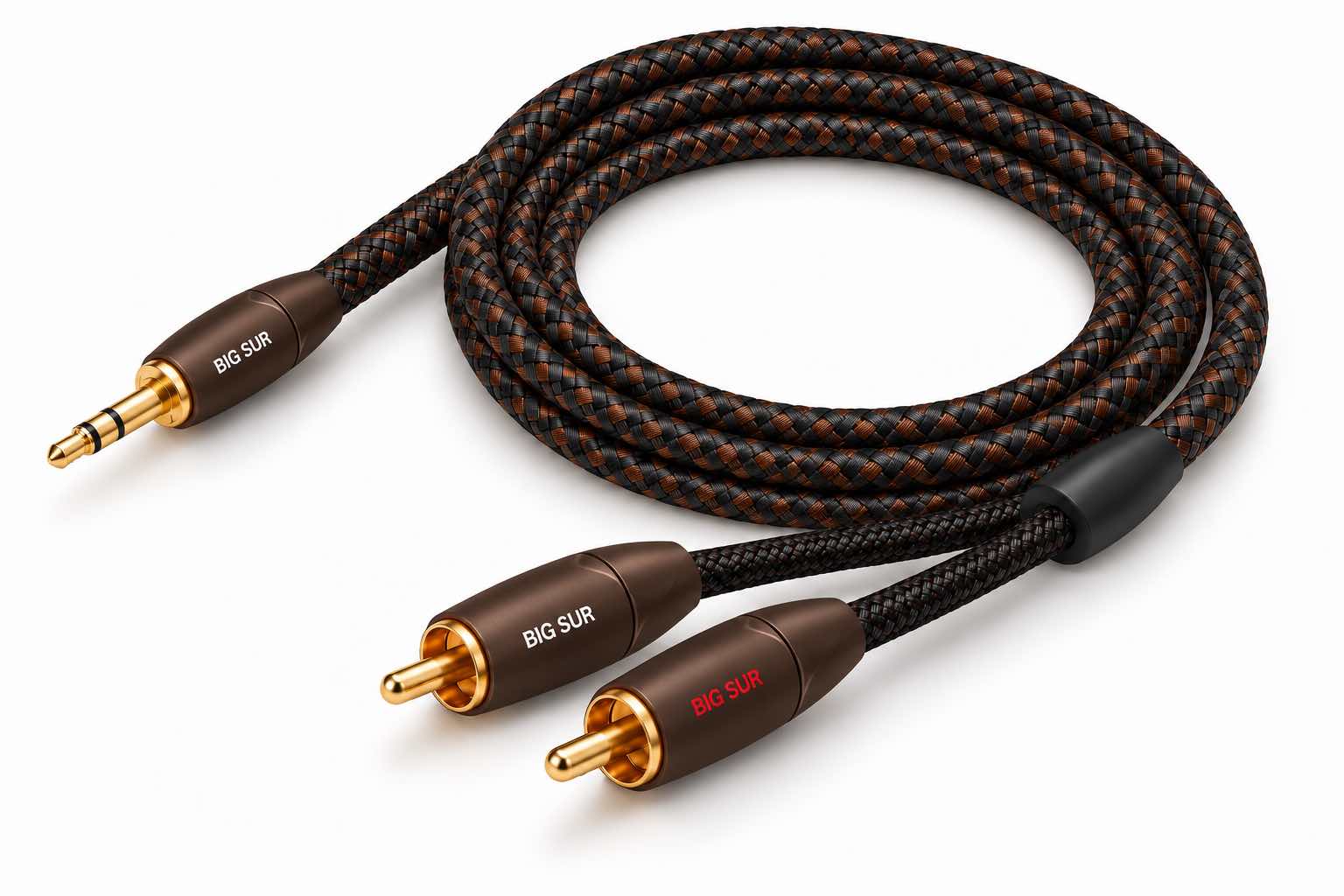
A 3.5mm-to-RCA interconnect lets a source built around a small headphone-style jack — a phone, portable player, or compact streamer — feed a stereo system's RCA inputs directly, with no separate adapter in the signal path. What separates a premium cable from a bargain one is conductor quality and shielding against outside noise.
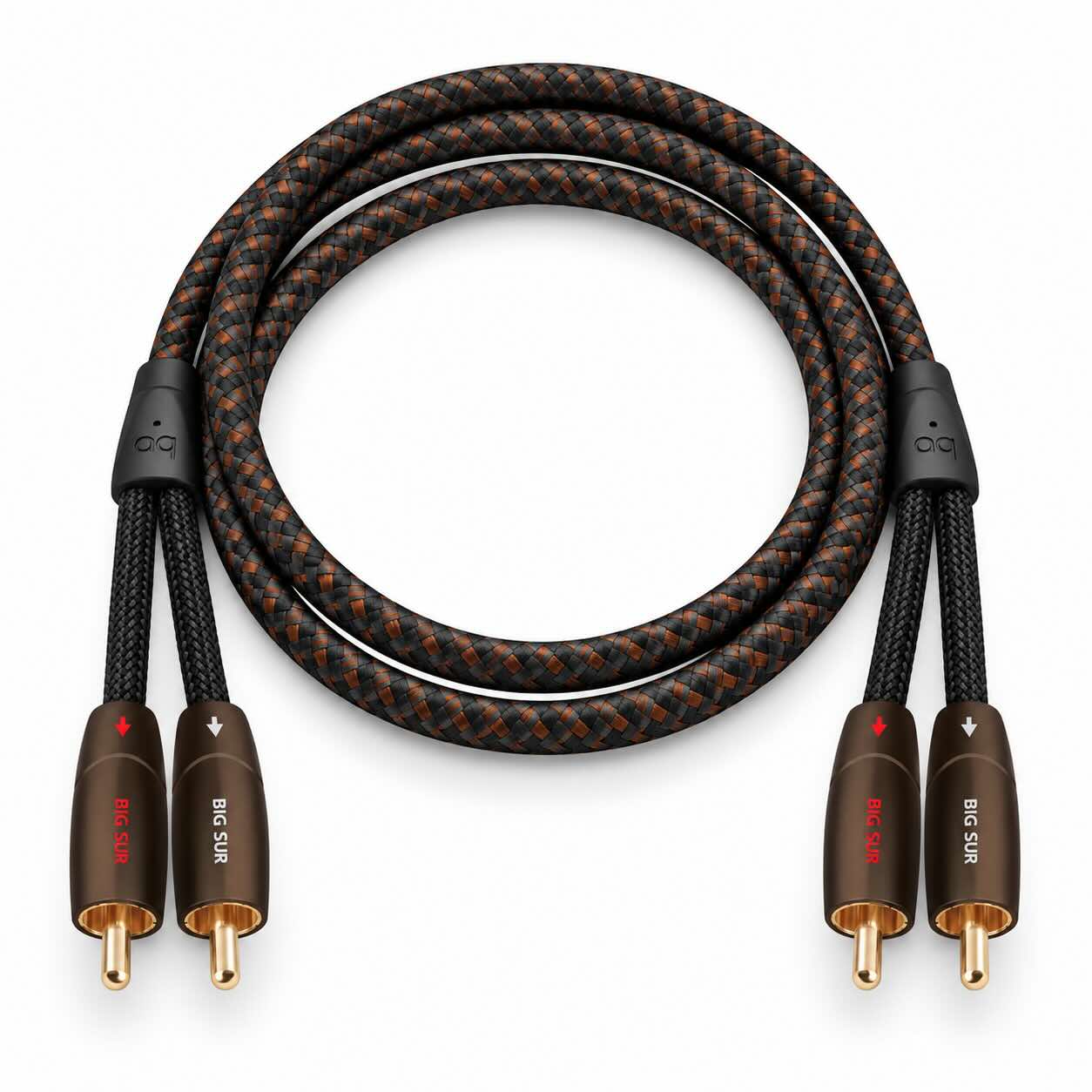
AudioQuest's Big Sur moves to Perfect-Surface Copper+ conductors, a purer grade than the Long-Grain Copper used in Evergreen and Tower, while keeping the same Foamed-Polyethylene dielectric and Direction-Controlled Conductors approach, in a Brown/Black Braid jacket.
AudioQuest says Perfect-Surface Copper+ (PSC+) solid conductors minimize distortion caused by grain boundaries and maximize linear RF Noise-Dissipation, the next material step up from the Long-Grain Copper used lower in the range. Big Sur's insulation is a nitrogen-injected Foamed-Polyethylene, a Big Sur-specific detail.
Big Sur uses Direction-Controlled Conductors, with each conductor set to run in one direction — the same approach carried over from Evergreen and Tower, now paired with the purer conductor.
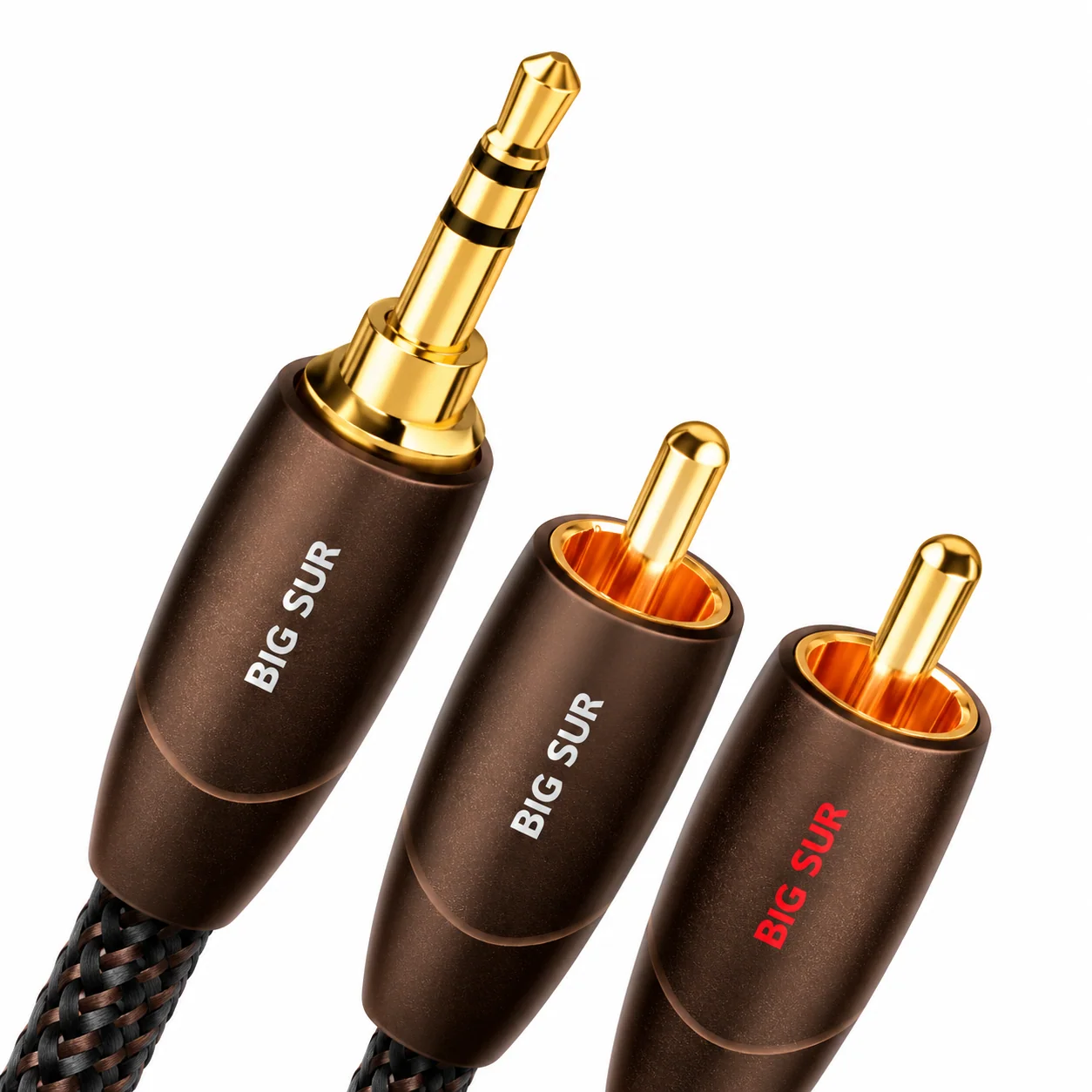
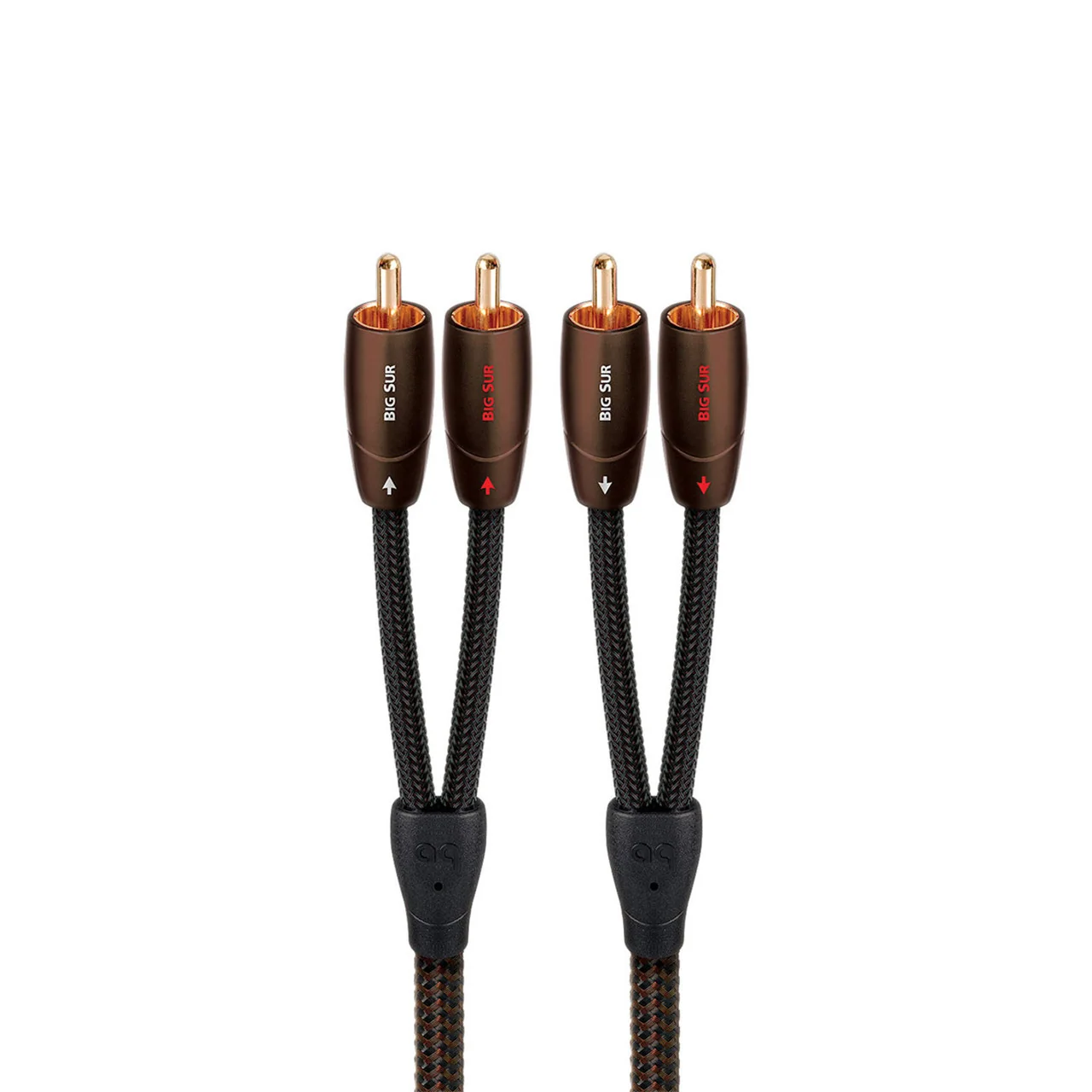
Big Sur ends in a 3.5mm mini plug on the source side and a pair of high-grade, purple-copper RCA plugs on the amplifier side, both cold-welded and gold-plated to minimize distortion at these critical connection points.
Plug the 3.5mm end into your source's headphone or line-out jack, and the two RCA plugs into the matching RCA inputs on your amplifier or receiver, matching red to red and white/black to white/black.
Then power up the system as usual.
A 3.5mm-to-RCA interconnect is one link between a source and an amplifier or receiver. It usually joins these categories.
Many portable players, phones, and compact streaming devices only offer a single 3.5mm headphone-style output, while most home amplifiers and receivers expect a stereo pair of RCA inputs; this cable bridges that one mismatch without an extra adapter.
AudioQuest controls the directional grain structure of its conductors so induced noise drains away from the circuits it would otherwise disturb; where AudioQuest marks a direction on the cable, connect it running from source toward amplifier as marked.
Each conductor is set to run in one direction. The same approach is used on Tower, Evergreen, Golden Gate and Sydney.
AudioQuest Sydney is the next rung. It keeps Perfect-Surface Copper+ conductors but moves to Polyethylene Air-Tube insulation and direct-silver-plated Pure Purple Copper plugs.
Want to learn more about interconnect cables, system setup, or matching your gear? Visit our Learning Center for guides, tips, and expert advice.
Choose which cookies you'd like to allow. Necessary cookies keep the site working and can't be switched off.