{{ variable.name }} : {{ variable.values[selectedVariantsIndex[variable_index]].name }}
Quantity:
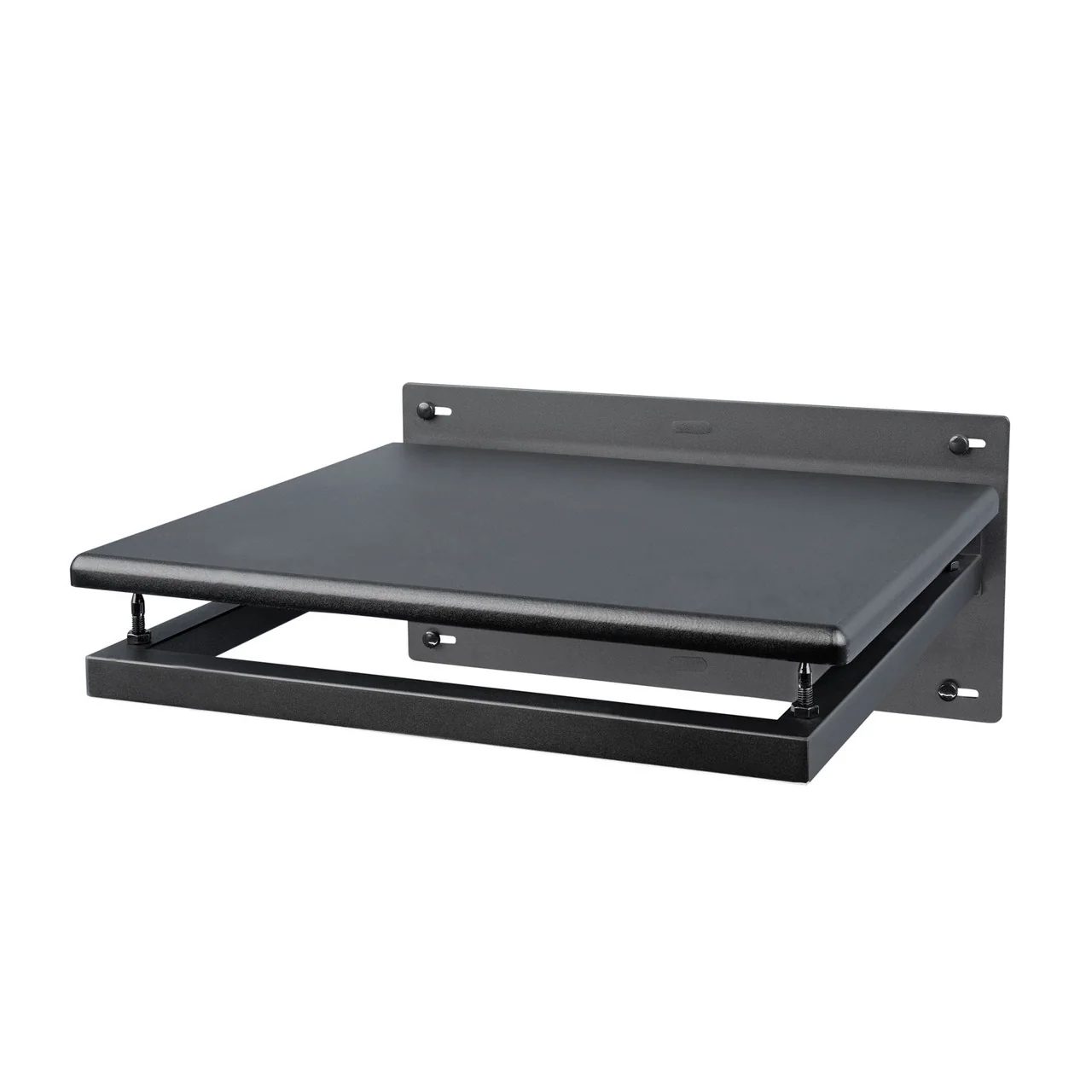
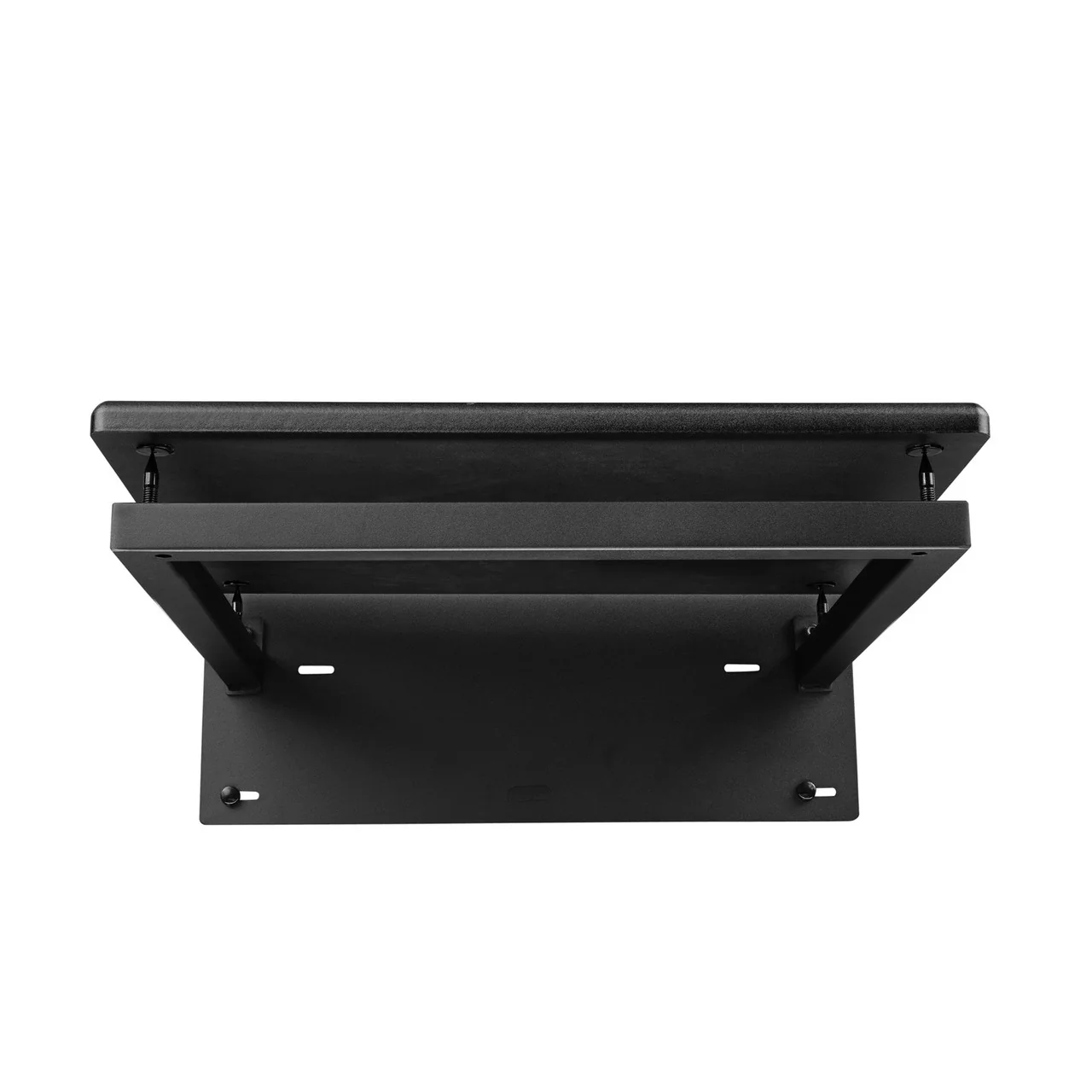
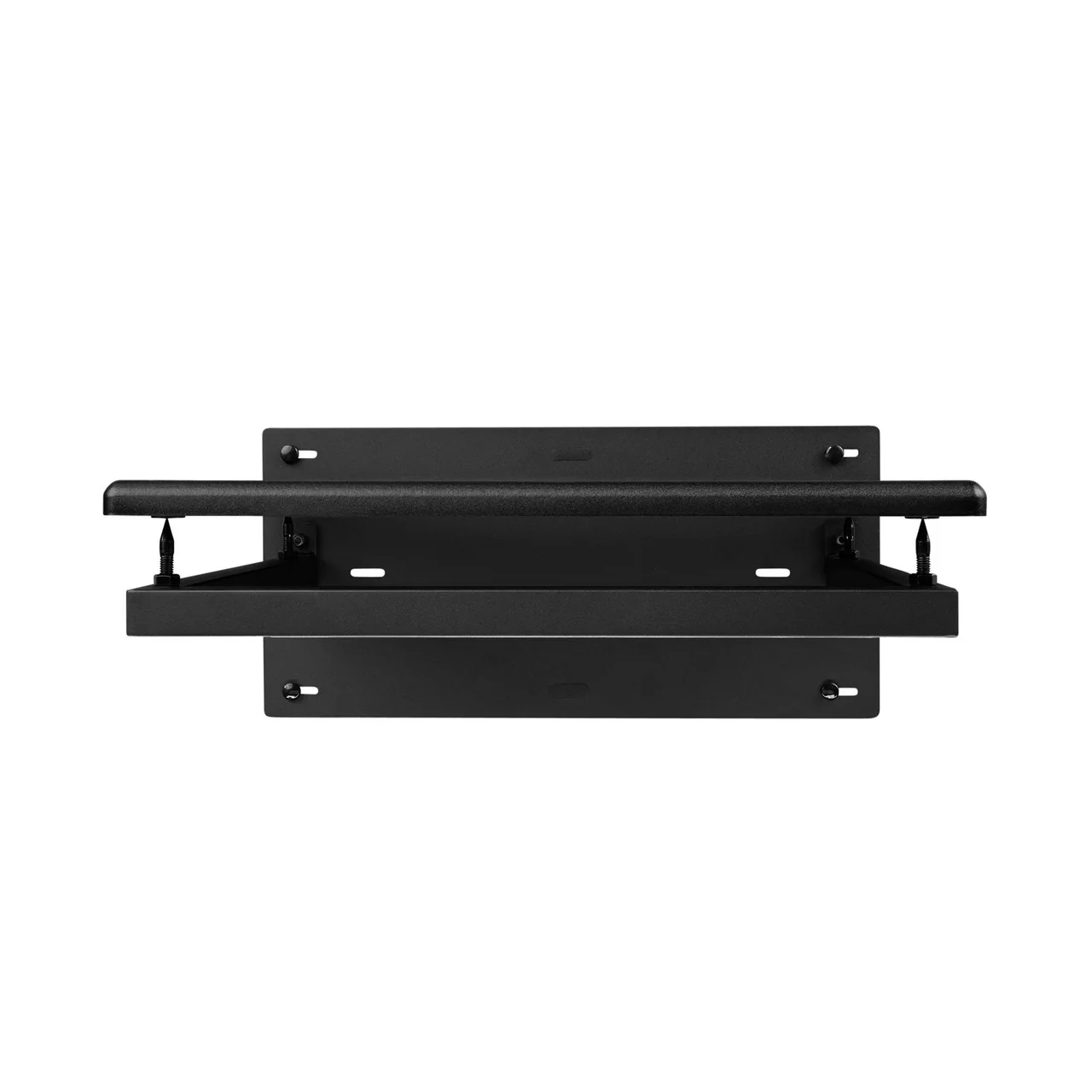
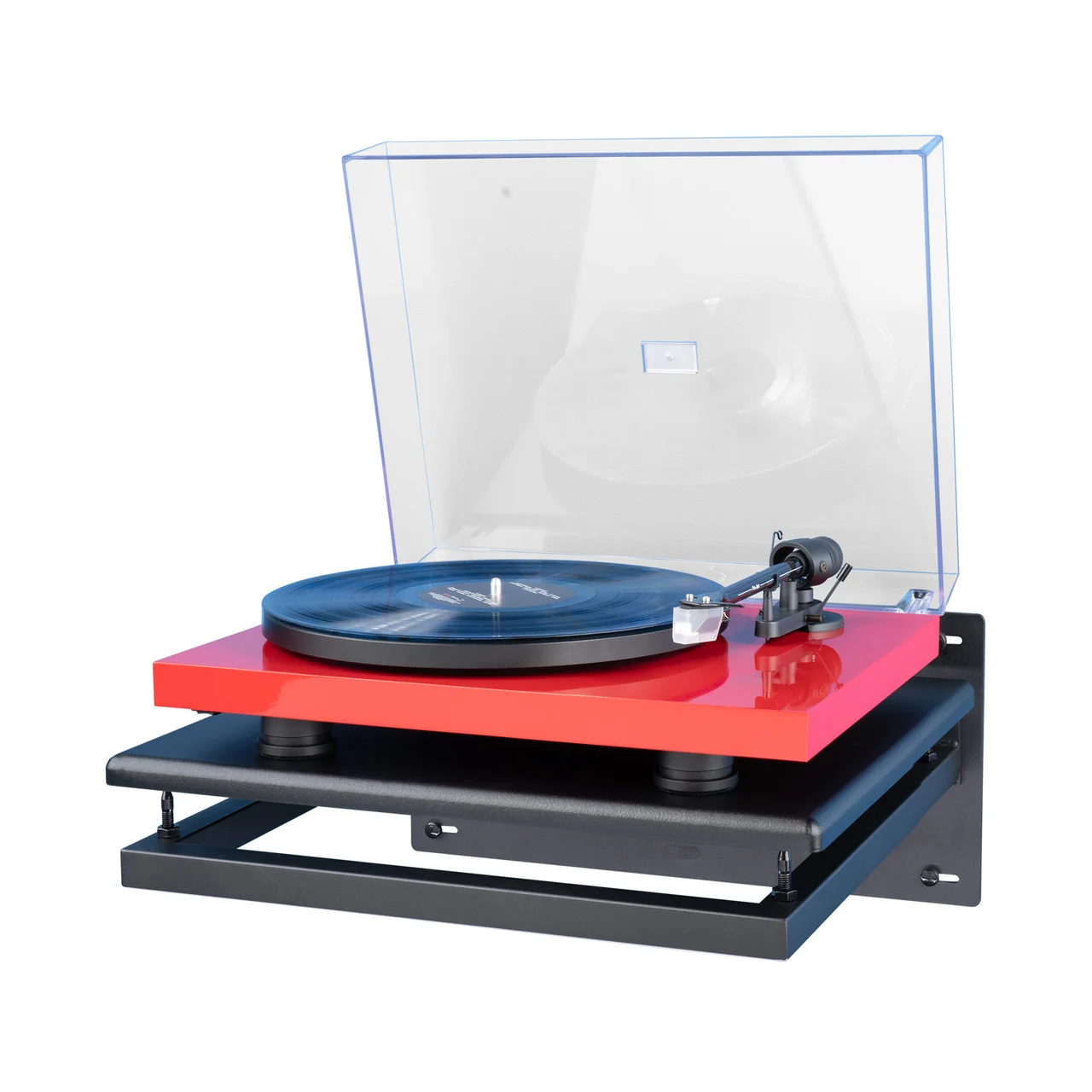
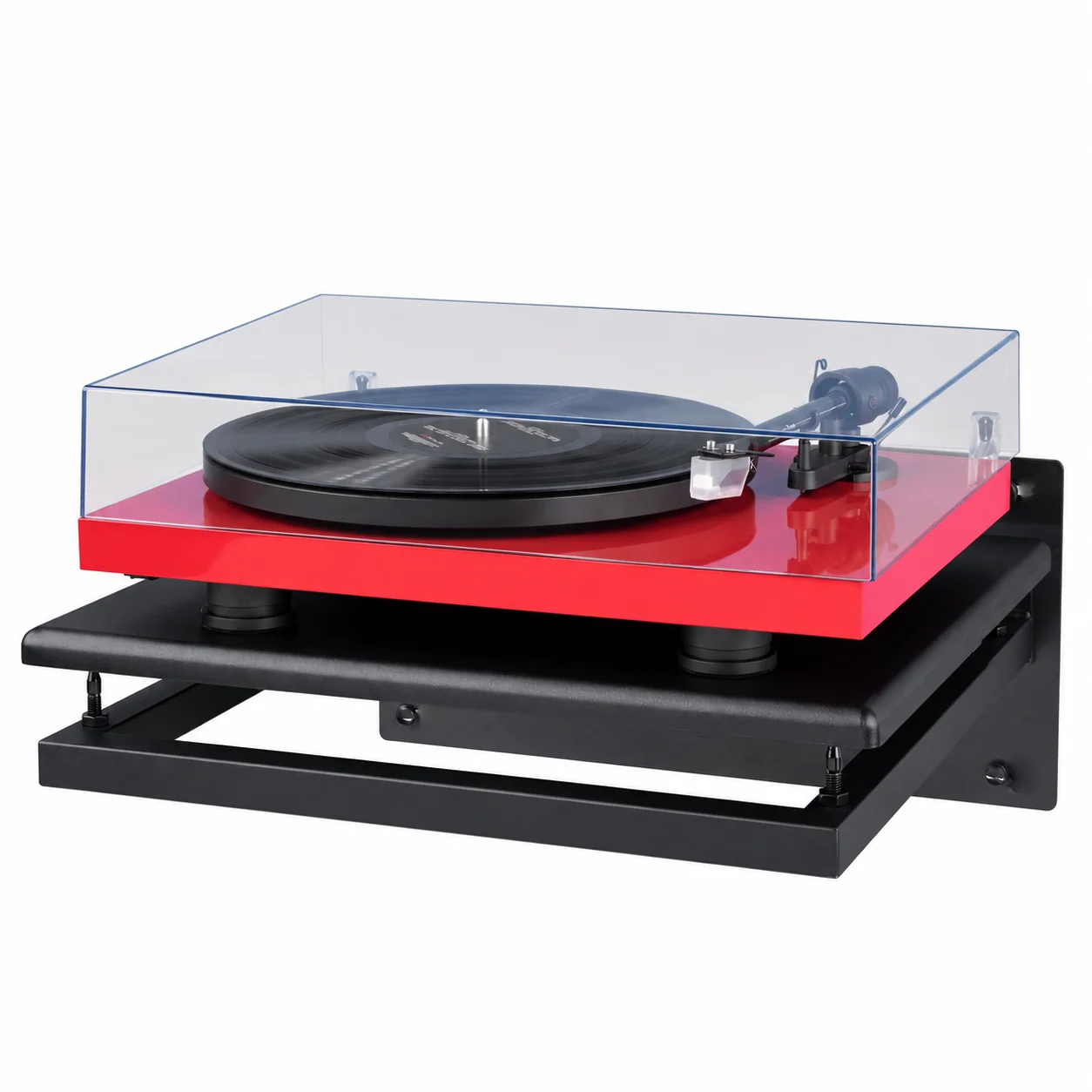
A wall-mounted turntable shelf rated to 40 pounds, on a one-piece L-shaped welded steel frame. The backplate is slotted for studs at 16 inches on center, which is the spacing almost every American house is framed to.
That last detail is the whole reason this shelf exists. A great many well-made wall shelves are designed elsewhere, and their mounting holes simply do not line up with US studs — which leaves you drilling into plasterboard and hoping.
A suspended floor vibrates in response to footsteps in the room, footsteps on the stairs, and traffic outside. Those vibrations travel up whatever the turntable is standing on and into the signal chain as noise and rumble.
A good rack solves this for most systems. Some floors never cooperate, and the only real answer then is to take the turntable off the floor altogether and hang it on something that does not move with it.
The frame is welded from a single piece into an L shape rather than bent and folded from a length of metal into a U. A folded U-shaped mount has a line along which it can buckle under load; a welded L does not.
The cantilever construction and the steel backplate carry that rigidity through to the wall itself. A wall shelf is a lever: everything standing on it is trying to rotate the whole assembly away from the wall, and stiffness at the joint is what resists that.
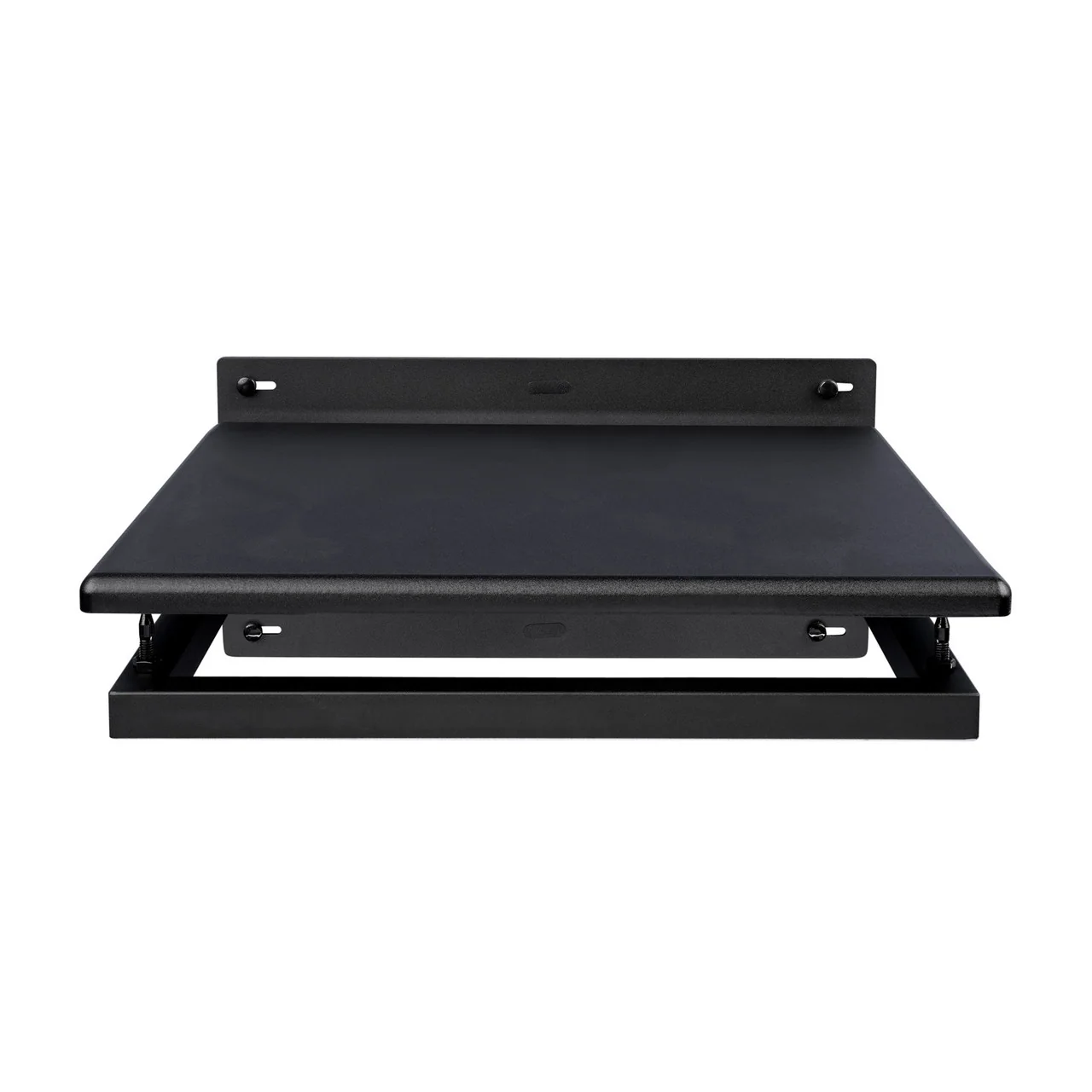
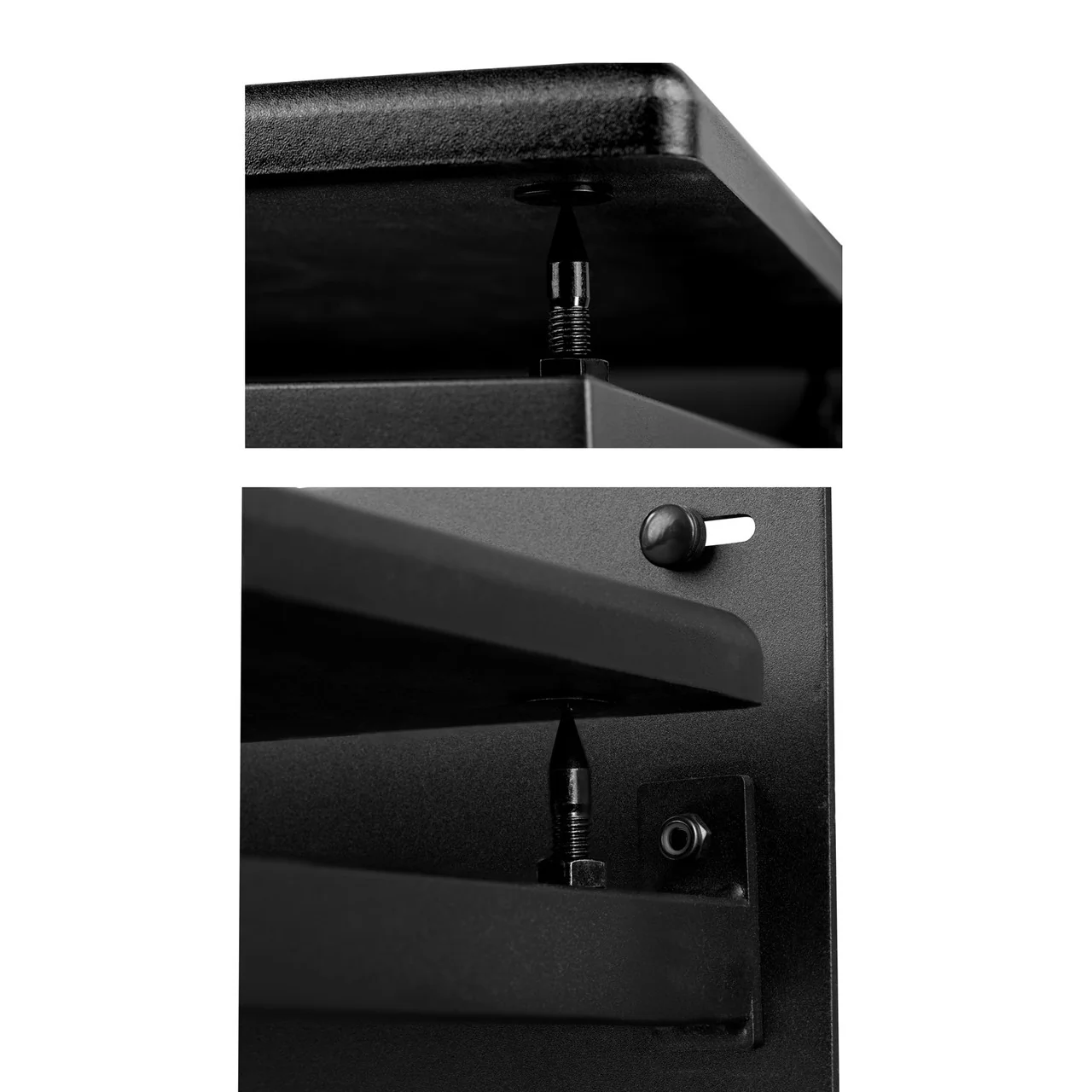
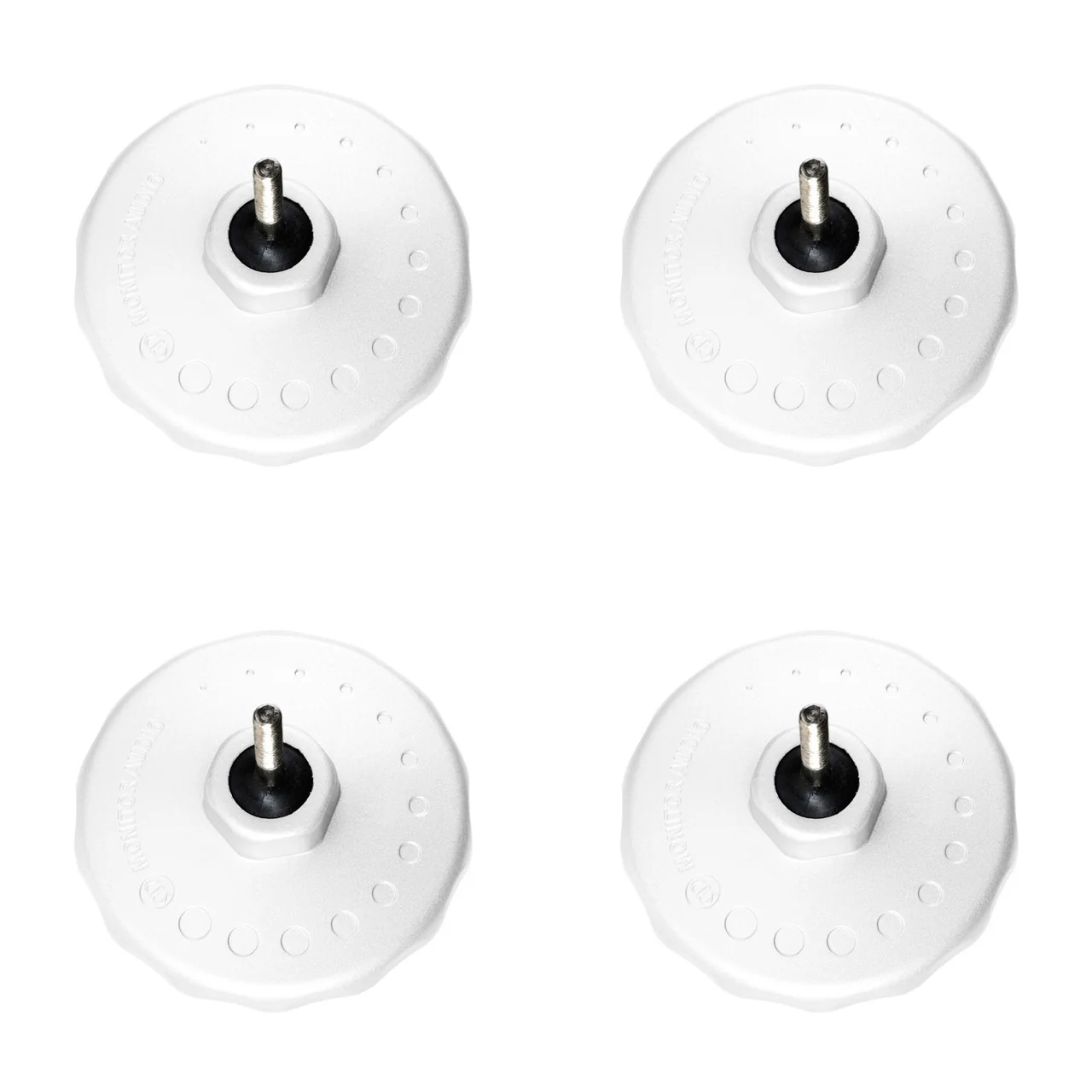
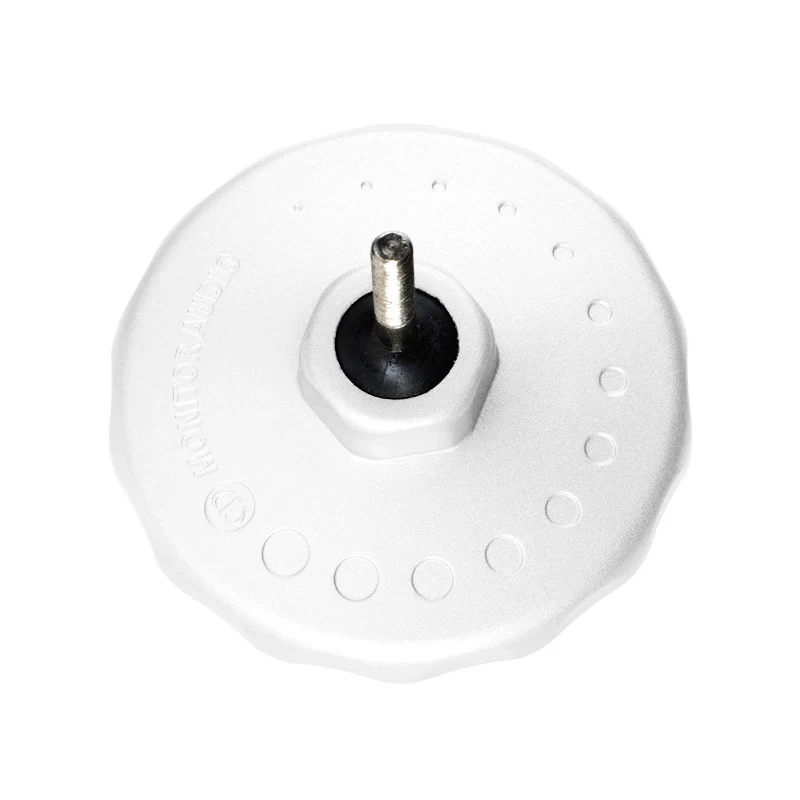
Decoupling from the floor is most of the work, but the shelf goes further. A non-resonant MDF insert sits in the steel frame — two materials behaving differently under vibration — and height-adjustable spikes let you level the platter rather than the bracket.
A one-inch gap between shelf and backplate handles cable management, and the backplate slots give left-and-right adjustment after mounting — so the shelf gets squared once the screws are in rather than needing to be perfect before.
Reviewing it on his YouTube channel The Joy of Listening to Vinyl, Rick Coste said "My soundstage widened… I could hear the instruments better, and the bass response was way better than I remembered it being…" and concluded, "For me, this shelf is worth every penny."
The shelf measures 18 inches wide and 15.5 inches deep, 19 mm thick, with a black vinyl finish; the backplate is 18 inches wide and 8.5 inches tall, and the steel is finished in black powder coat. Assembly is required and all mounting hardware is supplied with illustrated instructions.
Pangea are specific about the wall. The backplate and frame must be mounted to wall studs, masonry, brick or concrete, thick wood paneling or another strong surface. For drywall the 40-pound rating holds with a minimum of two supplied screws into wood studs plus at least two of the supplied drywall anchors — and their own advice is two screws into two studs.
Find the studs first — everything else depends on it. Assemble the frame, mark through the backplate slots, and drive at least two screws into solid timber or masonry. Use the slots to square the shelf left or right, then fit the MDF insert and set the spikes.
Level the platter rather than the shelf, and re-check tracking force once the turntable is in place and settled. Run the cables through the one-inch gap behind the shelf rather than over the front edge.
What most owners fit alongside a wall shelf.
Up to 40 pounds, against 25 pounds for the original version of this shelf. The rating assumes it is mounted into studs or solid masonry.
The backplate is slotted for studs spaced 16 inches on center, which is standard US framing. It also mounts to masonry, brick, concrete or thick wood paneling.
Pangea rate it to 40 pounds using a minimum of two supplied screws into wood studs plus at least two supplied drywall anchors. Their recommendation, and ours, is two screws into two studs — anchors alone are not the intended installation.
18 inches wide by 15.5 inches deep and 19 mm thick. Measure your turntable across its feet rather than its plinth, since the feet often sit wider.
Assembly is required, and all mounting hardware is included along with illustrated instructions. It ships in recyclable packaging rather than Styrofoam.
Want to learn more about turntable setup, record care, or getting the most from your vinyl? Visit our Learning Center for guides, tips, and expert advice.

Choose which cookies you'd like to allow. Necessary cookies keep the site working and can't be switched off.